Sunday, September 4, 2022

ITALIAN CATTARO (ACTUAL KOTOR IN MONTENEGRO)

In the south of coastal Dalmatia there it is a city that has a history closely linked to Italy: Cattaro, the actual "Kotor" (former capital of Montenegro). Indeed Cattaro -after being under the Republic of Venice for many centuries- has been "italian" two times in the last two centuries: in the napoleonic kingdom of Italy (1805-1810) and during WW2 (1941-1943). The following is an essay I have written in 2018 and that has been published -partially- on the english, spanish & italian wikipedia:

HISTORY OF "CATTARO" (actual Kotor, the main city of Montenegro)

Cattaro (or Venetian Cattaro, called in Italian "Cattaro la Veneziana") was the historical city populated by autochtonous "romanised" Dalmatians since the fall of the Roman empire and that belonged to the Republic of Venice for nearly five centuries until Napoleon times (for further info, please read my https://researchomnia.blogspot.com/2013/09/dalmatias-neolatin-city-states.html).

Later it was part of the Napoleonic kingdom of Italy until was added to the Austrian empire in the XIX century and started to lose the neolatin characteristics, while becoming a Montenegrin city called "Kotor" actually. However in 1941 the city was united for a few years to the Kingdom of Italy in the "Governorate of Dalmatia".

History

Ascrivium, or Ascruvium, the modern Cattaro, was first historically mentioned when submitted to Rome in 168 BC.

The "Dalmatian city-states", with own neolatin dialects (the main where in Veglia and Ragusa), showing Cattaro in southern Dalmatia

Roman emperor Justinian built a fortress above Ascrivium in AD 535, after expelling the Goths. The city had around 5000 inhabitants in that century.

A second town probably grew up on the heights around it, because Constantine Porphyrogenitus -in the 10th century- alluded to a "Lower Cattaro". The city suffered the barbarian invasions of the Avars and Slavs, but survived with the autochtonous romanised population greatly diminished to a few hundred inhabitants.

Cattaro was one of the more influential Dalmatian city-states of romanized Illyrians throughout the Middle Ages, and until the 11th century the Dalmatian language was spoken by the inhabitants of the city. Later, with the Venetian domination the inhabitants started to speak the "Veneto da mar" instead of the old Dalmatian language (until the XIX century, when the main language started to be the Montenegrin).

The city was plundered by the Saracens in 840 AD, and a few centuries later by the Bulgarians in 1102 AD. In the next year it was ceded to Serbia by the Bulgarian tsar Samuel, but revolted, in alliance with Ragusa, and only submitted in 1184 AD, as a protected state, preserving intact its republican institutions, and its right to conclude treaties and engage in war. It was already an "Episcopal See", and, in the 13th century, Dominican and Franciscan monasteries were established to check the spread of Bogomilism.

In the 14th century the commerce of Cattaro rivalled that of Ragusa, and provoked the jealousy of Venice. The downfall of Serbia in 1389 left the city without a guardian, and, after being seized and abandoned by Venice and Hungary in turn, it passed under Venetian rule in 1420. Since then, for nearly five centuries the city was called "Cattaro la Veneziana" (the venetian Cattaro), because it was a city fully Italian in architecture and literature and the majority of the inhabitants spoke the "Veneto da mar" Italian dialect (very similar to the one spoken in Istria). Cattaro in those centuries enjoyed a huge development and was the main city and capital of the "Albania Veneta".

Venetian Cattaro was a catholic city, with the territory of the Diocese that even today corresponds to that of the historical region Albania Veneta since 1571. Cattaro was the most eastern city of Catholicism in the Balkans dominated by the Ottomans: it was the symbol of western society successfully facing Muslim attacks in those centuries.

However it was besieged by the Turks in 1538 and 1657 but saved by the venetian fleet; visited by plague in 1572 and nearly destroyed by earthquakes in 1563 and 1667.

The Republic of Venice reconstructed Cattaro after the terrible earthquake of 1667 (https://www.total-montenegro-news.com/lifestyle/1247-italy-invests-in-its-cultural-heritage-in-boka-bay).

By the Treaty of Campoformio in 1797 it passed to Austria; but in 1805 -by the treaty of Pressburg- Cattaro was assigned to the kingdom of Italy (1) and later was united in 1810 with the first French Empire.


Venetian Maritime Gate in the Cattaro city-walls


Napoleon included Cattaro between 1805 and 1810 in his "Napoleonic Kingdom of Italy". and made a decree establishing the use of the Italian language in schools throughout Dalmatia.

Cattaro was nearly fully venetian speaking in those years

In 1814 the city was restored to Austria by the Congress of Vienna, but the Italian language remained the official language (with German). After that year some slavs started to settle in the city from the surrounding territories.

The Cattaro population in 1848 showed strong support toward Venice and the early Italian Risorgimento:

When was informed of the Austrian concession to a "free" Constitution, on March 23, 1848, the Cattaro population poured into the streets acclaiming to Italy while on the same day the municipality voted for union with Venice. The "Vladika" (ruler) of Montenegro, worried about these upheavals, spoke against the people of Cattaro ( and of the Ragusa people - even if Austrian citizens) stating that if any other exaltation for the Italian revolution had been demonstrated he would reduce "to ash" and sprinkle "blood" in the whole southern Dalmatia. At the same time he sent a battalion which, with arms, removed the possibility that the initial uprising was transformed into a real insurrection. The inhabitants of Cattaro, however, continued to follow the events of the Italian Risorgimento: among the original "Mille", who with Garibaldi sailed from Quarto to Sicily to unify southern Italy to the Kingdom of Italy , there was also Marco Cossovich, a native of Venice but from a Cattaro family .

During the XIX century, Cattaro was the chief town of an administrative district in austrian southern Dalmatia. Cattaro occupied a narrow ledge between the Montenegrin Mountains and the "Bocche di Cattaro", a winding and beautiful inlet of the Adriatic Sea. This inlet expands into five broad gulfs, united by narrower channels, and forms one of the finest natural harbours in Europe.

Teodo, on the outermost gulf, is a small naval port. In the first years of the 20th century, Cattaro was strongly fortified, and about 3000 troops were stationed in its neighborhood.

On the seaward side, the defensive works included Castelnuovo (actual Erceg Novi), which guarded the main entrance to the Bocche. On the landward side, the long walls running from the town to the castle of San Giovanni, far above, formed a striking feature in the landscape; and the heights of the "Crevoscia", a group of barren mountains between Montenegro, Herzegovina, and the sea, were crowned by small forts.

Venetian symbol on Cattaro's venetian walls

There were many interesting places on the shores of the Bocche. Castelnuovo was a picturesque town, with a dismantled 14th century citadel, which has, at various times, been occupied by Bosnians, Turks, Venetians, Spaniards, Russians, French, English and Austrians.

The orthodox convent of St. Sava, standing amid beautiful gardens, was founded in the 16th century, and contained many fine specimens of 17th century silversmith work. There was a Benedictine monastery on a small island opposite to Perasto (Perast), eight miles east of Castelnuovo. Perasto itself was for a time an independent state in the 14th century. Rhizon, the modern hamlet of Risano, close by, was a thriving Illyrian city as early as 229 BC, and gave its name to the Bocche, then known as Rhizonicus Sinus (2).

In the second half of the XIX century the slav nationalism erased nearly all the venetian-Italian presence in the city, that was called officially Kotor after WWI. However in the early 1900 census there were some hundreds of Italians still living in Austrian Cattaro: they were less than 2% of the inhabitants.

Italian irredentism of Cattaro was supported and promoted by Fascism in the late 1930s. As a consequence when Italy (with Germany) defeated Yugoslavia in 1941, between 1941 and 1943 the Kingdom of Italy annexed the area of Yugoslavian Kotor - which became one of three provinces (with the official name: "Regia Provincia di Cattaro") of the Italian "Governorate of Dalmatia" and that had an total area of 4801 km2 with a population of 380,100 (3).

It is noteworthy to pinpoint that the Queen of Italy in those years was Elena (daughter of the king Nicholas I of Montenegro): she supported the union of the Cattaro region to Italy and personally "protected" the city's citizens.


Under Italy, the province of Cattaro (subdivided in 15 "Comuni") had an area of 547 Km2 and a population of 39,800 inhabitants. Most of the province's inhabitants were Serbs (mostly Orthodox and some Roman Catholics), and there were 350 Dalmatian Italians, concentrated in Cattaro and Perasto (now Perast). The only official language in Cattaro was the Italian and all the schools were in Italian language. The Italian government did many works in these few years, like the improvement of sewage, roads and hospitals.

After September 1943 the Germans occupied the city and consequently started a continuous reduction of the Italian presence in Cattaro (that after 1945 was only called "Kotor" under Tito's communist rule)

Actually the Italian Community of Kotor (Comunità Italiana di Cattaro), in the city of Kotor is being registered officially (with the "Unione Italiana") as the Italian Community of Montenegro (Comunità degli Italiani del Montenegro) and is enjoying a huge success (4). In connection with this registration, the "Center for Dalmatian Cultural Research" (Centro di Ricerche Culturali Dalmate) has opened in 2007 the Venetian house in Cattaro to celebrate the Venetian heritage in coastal Montenegro (5).

Venetian Architecture

More than four centuries of Venetian domination have given the city of Cattaro the typical Venetian architecture, that contributed to make actual Kotor a UNESCO world heritage site (6).

Cattaro's Venetian Walls

These are the most important structures & buildings in venetian style:

1) The Republic of Venice left in Cattaro the magnificent "Venetian Walls" surrounding the historical section of the city. The Venetian fortification system, which protects the city from the sea, is actually a wall 4.5 km long, 20 m high and 15 m wide, and is preserved as one of the most important architectural masterpieces in Montenegro.

The construction of the ramparts were built and rebuilt up to the 18th century. The oldest town gate of Cattaro, of the three existing in the town, is the “South” gate which was partially constructed in the 9th century. The “North” and the “Main” gates were built in the Renaissance style by the first half of the 16th century.

2) The most representative monument of Roman architecture in the Adriatic Montenegro is the magnificent "Cathedral of Saint Tryphon", constructed in 1166 and built on the remains of a former Catholic temple from the 9th century. There are the remains of the frescos from the 14th century and the valuable treasury with domestic and Venetian golden works dating from the 14th to the 20th century.

3) Besides the Cathedral, in the heart of the old town, there are magnificent examples of sacral venetian architecture originating from 12th till 20th century:
A-The Romanic church of St. Lucas was built in 1195, while the Romanic church of St. Ana dates from the end of the 12th century and has frescos dating back from the 15th century.
B-The Romanic church of St. Mary dates from 1221. The church contains the remains of a monumental fresco painting as well as an early Christian baptistry.
C-The Gothic church of St. Mihovil was built on the remains of the Benediction monastery from the 7th century with frescos dating back from the 15th century.
D-St. Clara's church dates from the 14th century with the extremely beautiful marble altar, the work of Francesco Cabianca, from the 18th century.
E-The Church of Lady of Health originates from the 15th century.
The Orthodox Church of St. Nicolas was built by the beginning of the 20th century with a valuable collection of icons.

Old Cattaro's postcard, showing typical venetian architecture buildings and the famous "Clock Tower" built in the "Cinquecento" (XVI century).

4)There are also numerous palaces in venetian style in the actual "Kotor Stari Grad" (downtown Kotor). A few were built in the "Cinquecento" (XVI century) like the famous "Palazzo Pima", where was born the writer Bernardo Pima.

Pima Palace (XVI century)

Some of the most famous of these venetian-style palaces are:

The Drago palace with Gothic windows from the 15th century; the Bisanti palace from the 17th century; the Pima palace, with typical Venetian renaissance and baroque forms from the 16th century; the Pasquali palace from the 16th century; the Grubonia palace with the built-in emblem of the old Cattaro's pharmacy established in 1326; the Gregurina palace, from the 17th century, which today contains the Naval museum, and finally the Clock tower, from the 16th century, with the medieval pillory just beside it.

Additionally, in those centuries Italian Renaissance literature enjoyed a huge development in Cattaro: the most famous writers (often writing in Italian language) were Bernardo Pima, Nicola Chierlo, Luca Bisanti, Alberto de Gliricis, Domenico and Vincenzo Burchia, Vincenzo Ceci, Antonio Zambella and Francesco Morandi.

There have also been notable Italian-language writers in the 15th to the 18th century who originated from Venetian Albania and lived in the region capital Cattaro, notably Giovanni Bona Boliris, Cristoforo Ivanovich and Ludovico Pasquali.

The Cattaro area is home to numerous tourist sights in the surroundings: St George Island (Sveti Đorđe) and Our Lady of the Rocks islets off the coast of Perasto are also among the more popular destinations in the vicinity. The island of St. George contains the famous Saint George Benedictine monastery from the 12th century and an old graveyard for the old neolatin nobility from Perast and Cattaro.

Notes

1) Map showing Cattaro inside the Kingdom of Italy of Napoleon: https://digilander.libero.it/arup/istriaNapo.html
2) Rhizon submitted to Rome in 168 BC
3) Rodogno, Davide (2003). Il nuovo ordine mediterraneo. Turin: Bollati Boringhieri
4) Comunita' italiani di Cattaro/Montenegro:https://www.comunitamontenegro.org/it/aktivnosti/
5) Photos of Cattaro and other cities of Venetian Albania, with article "Il Veneto nel Cattaro" (in Italian): http://www.letrevenezie.net/pubblicazioni/Veneto%20Cattaro/art-03.htm
6) UNESCO's historical and cultural Region of Cattaro (actual Kotor):https://whc.unesco.org/en/list/125

Monday, August 1, 2022

NEW VILLAGES IN 1940 ITALIAN LIBYA

Maps with the location of the 26 villages (above: Tripolitania; bottom: Cirenaica; villages created in 1938 (in blue) and in 1939 (in red). In orange are the first four created in 1934 in Cirenaica)

THE NEW 26 ITALIAN VILLAGES CREATED IN 1938-1940 LIBYA

Italo Balbo as Governor of Italian Libya promoted a demographic colonization of the coastal areas of this colony by Italian families. Starting from 1938, he planned to relocate in just five years 100,000 Italians in a group of newly created farm villages: in early 1940 nearly 30,000 Italians were living in 26 agricultural villages of Tripolitania and Cirenaica. The beginnings of this colonization project were economically positive, but WW2 destroyed it all: by January 1943 the Allies had conquered all Italian Libya and the villages were mostly damaged & sometimes abandoned. A few survived with some Italian colonists until the late 1960s, but in worsening conditions (see the following video of Village Crispi in the 1950s:).

For a detailed & complete study with related photos, please read in Italian:https://njema.weebly.com/uploads/6/3/4/5/6345478/vittoria_capresi_-_i_centri_rurali_di_fondazione_libici_tesi_di_laurea.pdf

In 1938 more than 20,000 Italian farmers went to Libya and 26 agricultural villages were created for them: Olivetti, Bianchi, Giordani, Micca, Tazzoli, Breviglieri, Marconi, Garabulli, Crispi, Corradini, Garibaldi, Littoriano, Castel Benito, Filzi, Baracca, Maddalena, Aro, Oberdan, D'Annunzio, Razza, Mameli, Battisti, Berta, Luigi di Savoia, Gioda.

Ten other Libyan villages, in which Berbers and natives learned from Italian farmers to make money from their land with modern agriculture, were : El Fager (Alba), Nahina (Deliziosa), Azizia (Perfumed), Nahiba (Risorta), Mansura (Vittoriosa), Chadra (Green), Zahara (Fiorita), Gedina (New), Mamhura (Fiorente), El Beida (la Bianca) already named "Beda Littoria." All these ten villages had their mosque, school, social center (with gymnasium and cinema) and a small hospital, representing an absolute novelty for the Arab world of North Africa.

Indeed in this operation of Italian demographic colonization there was a unique and revolutionary novelty: the Italian government of Italo Balbo did not treat the native Libyan population as an "inferior race" (like did the French and British in their African colonies) to be exploited but, having recognized them Italian citizenship in the so called "Fourth Shore" of Italy, reserved the same treatment as the Italian nationals. So, farms to be cultivated were distributed to the Libyans (as well as to the Italians) and also for them were built some Libyan rural villages. All those ten villages were still inhabited and growing as agricultural centers in the independent Libya after WW2.

The agricultural village "Bianchi" -near Tripoli- when inaugurated in 1938 and showing the trees just planted

The following are excerpts translated from an essay written by Marco Piraino about these new villages (https://webcache.googleusercontent.com/search?q=cache:xPysHxJqUwkJ:https://www.revistalarazonhistorica.com/31-10/+&cd=33&hl=it&ct=clnk&gl=us ) and titled in Italian: "L’ITALIA FASCISTA E LA COLONIZZAZIONE DEMOGRAFICA DELLA LIBIA: premesse, sviluppi e conclusione di un progetto politico-sociale totalitario.

FASCIST ITALY AND THE DEMOGRAPHIC COLONIZATION OF LIBYA

The project (of Libya's colonization by 30000 Italian farmers) was officially launched on May 17, 1938 with the Royal Decree Law No. 701, which specified, among other things, the urgent and absolute need to adopt extraordinary measures to support demographic colonization. It involved the totality of the components present in the colonial society, with the precise purpose of achieving a substantial balance between the metropolitan and the Arab population, taking into account the demographic relationship unfavorable to the Italians, in favor of whom the program provided for the reception of forty thousand new settlers in two years (in fact they went down later to thirty thousand), a prelude to a much more ambitious goal that counted on being able to install a population for the middle of the century whose total number would have been about five hundred thousand metropolitan. Balbo so ... announces the great project in May 1938 and six months later the first twenty thousand settlers land in Libya. In just six months, mobilizing 10,000 Italian workers and 23,000 Libyans, the two colonizing bodies, under the energetic leadership of Balbo, build dozens of rural villages and hundreds of farmhouses, roads and aqueducts, while they provide for the delimitation of 1800 new farms . Each farm, painted in white and with simple architecture, is equipped with: a) a farmhouse composed of a dining room, three bedrooms and a bathroom; b) a barn behind, separated from the house, and a warehouse. The barn can accommodate four working beasts and has a concimaia attached; c) a well of the first aquifer and a cistern to collect rainwater.

Obviously, the main task of the central government, assisted by that of the colony, was to choose, transport and arrange hundreds of families on previously set-up farms, all naturally at the expense of the treasury. This policy harmonized with the fascist ideal of a beneficial totalitarian state, the bearer of order, discipline and prosperity in the lives of its most humble citizens. However, the selection of the first wave of settlers had not proved to be a simple task, occupying for three months special medical committees chosen for the occasion which examined 6,000 families who had applied for admission to the colonization program. The selection was made in three months by three itinerant Commissions, appointed by the Commissariat for migration and colonization, made up of agricultural, sanitary and administrative technicians. The average composition of the 1,800 families (1,000 are allocated in Tripolitania and 800 in Cyrenaica) is 9.01, that is three male work units, two or three female units and the rest boys from three to 15 years [...]. The colonial families are supplied by 750 municipalities and come mostly from the Veneto, from Emilia, from the Lombard provinces of Mantua, Brescia and Bergamo, from the Abruzzi, from Puglia, from Calabria and from Sicily. The Commissariat that organizes large departures has arranged for one companion for every twenty families, who will direct them from their place of origin to the houses to each of them destined for Tripolitania and Cyrenaica [...].

The families are thus divided into the various villages: Tripolitania (National Fascist Institute of Social Security): 100 families at Oliveti, 75 at Bianchi, 111 at Giordani, 120 at Tarhuna; (Body for the Colonization of Libya): 37 at Oliveti, 320 at Crispi, 100 at Gioda, 110 at Breviglieri and 21 at the Azizia. Cyrenaica: 176 to the Barca [Barce], 210 to the Oberdan, 60 to the D'Annunzio, 120 to the Battisti, 39 to the Zorda, 81 to the Maddalena, 25 to the Race, 40 to the Deda [Beda], 35 to the Slonta, 15 to the Faidia , 66 to the Savoia [Luigi di Savoia], 35 to the Berta [...]. Subsequently the imposing program of demographic colonization will have new developments and the work of high civilization realized by the Regime will contribute effectively to the attainment of the economic autarchy of the Nation.

Village "Oliveti" in Tripolitania, surrounded by farm houses

Plans

The plans for logistics, organization and the transfer of settlers, in both migrations planned for the two-year period 1938-1939, were carried out punctually, with departures scheduled every year on the 28th October, the anniversary of the "March on Rome" , thus bringing about thirty thousand metropolitans to the coasts of Libya, who were placed on specially cleared state lands. The farmers were welcomed in the villages and colonization areas mostly developed along the coastal road by I.N.F.P.S. and from the E.C.L. that, assisted by the technical services of the government and the colonization offices, had supervised the completion of all the infrastructures and the development of land reclamation despite having a very short period, also setting up the enlargement of arable land in agricultural areas chosen in precedence and exploitation of new areas in view of the growing number of incoming "new Libyans". The two bodies, following now the established practice in previous years, planned the regular subdivision of the land into small lots, providing as usual the assistance of the settlers in the cultivation of their farms, after the latter had naturally been placed in their new homes equipped with of the necessary reserves. The total amount of the amount that was paid by the State for this plan was calculated at 945 million lire, of which 321 were destined for major general development works carried out directly by the government, including hydraulic works consisting of 2 large aqueducts and 35 artesian wells with related annexed structures. In addition, 250 kilometers of roads would have been built with the related communication lines, as well as the first nuclei of 20 new agricultural villages. A quota of 380 million was instead allocated to the construction of rural houses and the arrangement of agricultural land transformed from steppes into arable land. The remaining sum should have covered the technical organization of the operation and the contributions provided for the reclamation law, which should have been paid by the State in the first two years of the operation.

Overall, on the death of Balbo, which occurred on June 28, 1940, eighteen days after Italy entered the war in the Second World War, the work of corroborating the Libyan territories exceeded 200,000 hectares between private companies and official colonization. . In Cyrenaica, ten villages had sprung up, as well as various concessions and private companies, with 2755 families (over 10.000 members). Seven villages built in Tripolitania by the Tripolitania Colonization Agency at Misurata, Azizia and Tarhuna and nine others built by the National Institute of Social Welfare, without counting the private concessions and those of the Italian tobacco company at Garian which welcomed 3960 families with 23.919 members. The pertinent reclamation plan concerning the Italian demographic colonization in the years 1938-39 would have covered an area of ​​approximately 133,000 hectares divided in turn into lands extended from 15 to 50 hectares, with relative annexed farm, all due to the availability of water that of the type of cultivation.

As regards the measures taken in favor of the Arab population in the agricultural colonization program in the years 1939-1940, the Muslim villages of Zahra (Fiorita), el-Fager (L'Alba) and Chadra (Green ), Nahida (Risorta), Gedida (Nuova), Mansura (Vittoriosa); in Tripolitania the villages of Mahamura and Naima were inaugurated. 1,400 hectares of land were also destined to Libyan peasants, even if at the current state of research only 500 hectares are actually assigned, with plots whose size ranged from 2 to 10 hectares. Regarding the assignment of houses and land in these villages we have definite information only concerning 32 families residing in Alba and Fiorita, while in Mahamura we are aware of 100 farms occupied by as many families. However, it must be recognized that the set of the aforementioned measures could never be considered fully operational, both because of the initial mistrust of the native populations and, subsequently, of the impossibility of proceeding further in the complete realization of such plans due to the negative outcome the war had for the fascist Italy, with the invasion of 1941 and the integral integral occupation of Libya by the armies of the British commonwealth of 1943.

Conclusions

Italian colonists -with their belongings- approaching their farm village in Cyrenaica

In making a final judgment on the process of demographic colonization in Libya, the majority of historians have provided an overall negative balance of the story, minimizing the negative impact that the world war had on it and attributing the real failure of this project to the choices wrong strategic elaborated by the fascist regime well before the outbreak of hostilities with the allied powers, in this regard it is not unusual to come across statements like this: The reasoning later advanced by the apologists, for which the "demographic" colonization would be aborted only for the arrival of the war, it appears without foundation: the errors and failures were precedents, as evidenced by the frantic change of strategies in the space of a few years. A critical scholar noted that the high expenses of the regime and the poor results collected by the agrarian colonization of Libya, which moreover affected only a fraction of the Italian population residing in the colony, were "indicative only of the waste, of the investments and of the wrong choices" of fascism, rather than its efforts to enhance the Fourth side. There is no doubt that the Regime, also with regard to the colonial affair in question, in an attempt to gradually realize its own peculiar organizational political model, with Mussolini intent on acting as arbitrator in search of a substantial balance between the orientations expressed by the Fascist Party leaders, reflecting in this the internal dynamics of national politics, fluctuated, according to what we have observed, from an initial action to support the private initiative substantially of a liberal sign to a statist economic policy of the mold corporate-leadership, as can be clearly seen from the enormous effort made by the fascist state described in the previous pages and profused in the project of integrating the Libyan territories into the Italian political and economic circuit.

However, it is equally important to specify some data, particularly of a demographic and economic nature, to be contextualised in relation to a different perspective of analysis concerning the actual primary needs of the fascist government. Data that end up characterizing the modus operandi for an unquestionable primacy attributed to the ideological objectives of the totalitarian policy of the Regime, rather than to the opportunities and the real convenience suggested by the analysis of simple economic data referring to the concrete potentialities of the Libyan territory. Well, for what concerns the quantitative presence of Italians in Libya, the remarkable and consistent numerical growth of the so-called metropolitan is undoubtedly evident, whose population was more than quadrupled in less than two decades. In fact, from the 27,163 inhabitants present in 1921, the considerable figure of 128,264 inhabitants recorded in March 1940 was recorded, on the eve of Italy's entry into the war, a figure which we know was destined to grow for some time (at the end of 1940 there were 140,000 Italian civilians present on the "fourth shore" against 30,000 Israelites and 850,000 registered Libyans). An element which must necessarily be combined with the evident growth of the indigenous Muslim population compared to previous years. All phenomena of development that manifest the most significant demographic increase starting from the start of the direct management policy by the fascist State with the demographic colonization plans, significantly concomitant with the arrival in the colony of Governor Balbo and the inauguration of the great public Works. These works, with reference to the report presented by Minister Teruzzi at the end of November 1939, were so extensively illustrated: The complex of public works of the last two years is really important, above all due to the great amount of work required by the implementation of intensive demographic colonization plans.

To allow easy and rapid communication with the agricultural villages, numerous roadways have been and are being built across the colonization areas for a total length of about 380 km. Numerous tracks are connected to these roads. Of particular importance is the access road to the Ras Hilal landing, built with the same characteristics as the Libyan coast road and with a section running along the road tunnel that constitutes the access to the sea in most of the areas in the Cyrenaic Gebel. For the exploitation of the potassium salts of Marada and to facilitate the transport of the mineral to the coast from where it will be embarked for Italy a trunk of road is under construction [...] Recently the artificial road has been completed that crossing the Gefara [...] joins the port of Zuara with the territory of the Gebel Nefusa grafted into the Nalut roadway near Giosc. Several other local road trunks have been built and the vast network of tracks with natural bottoms has been improved and increased.

Among the aqueducts for the service of colonization, the importance of the Cyrenaic Gebel already in an advanced stage of construction, with a development of 198 Km, is of truly remarkable importance. of the capacity of 5000 cubic meters per day to all the colonization areas of the Gebel up to the most distant villages of Baracca and Filzi to the west of Barce. In western Libya, the aqueducts of Breviglieri and Marconi are of considerable importance. For the supply of drinking water in the main inhabited centers, considerable work has been carried out, including the development of the Benghazi water network and above all the completion of the Tripoli aqueduct, which today can have about 19,000 cubic meters of excellent second water per day groundwater. There are also numerous artesian wells and first and second aquifer wells excavated in colonization villages and private concessions. Particular care has been given to strengthening existing ports and creating new landings. In the port of Tripoli it was started in 1937 and a vast excavation program is being conducted at an accelerated pace so that it is now possible for the major transatlantic ships to enter the port and stand alongside the quay. Construction of new docks is also underway in order to increase the commercial potential of the port.

Villaggio "Oliveti" in 1939 Tripolitania

Expansion works are also underway in the port of Benghazi, a 160-meter-long reinforced concrete dock was built in Ras Hilal [...]. In addition to the schools included in the villages, another 28 school buildings sprang up in the various colonization areas, while new secondary primary schools were opened in Tripoli, Benghazi, Derna and Misurata, Italo-Arab schools in Jefren, Tauorga, Tigrinna, Zavia, Augila. The hospitals of Tripoli and Benghazi have now been completed and are now equipped with extremely modern hygiene and prophylaxis laboratories, and extension work is underway for those of Barce and Misurata. Of recent construction are the asylum for Muslims and the sanatorium of I.N.F.P.S. in Tripoli. The development of the major centers of the Fourth Shore in recent years has been truly remarkable. It will suffice to mention that in 4 years construction companies have increased by 20% with an increase in national workers employed of 300%. New important public buildings have sprung up and in relation to the ever-increasing building needs the new regulatory plans have been drawn up and approved, not only of the main urban centers, but also of many other smaller centers. Like -for example- in the nice village Oberdan.

An aerial photo of the village Oberdan in Cyrenaica, created in 1939

The complex of these results, according to the data reported so far, allows to establish how in reality the general picture of the colony was in full evolution and with concrete prospects for growth and improvement. An economic-demographic framework that we can define as encouraging. In such a context, just at the beginning of a phase of economic development and the resumption of demographic growth, the consequences and negative effects on the life of the colony that had the entry of fascist Italy in the world war in June 1940 should certainly be reconsidered. , beginning with the alteration of the normal daily rhythms of a territory that, it is good to not forget it, for the supplies depended almost totally on the connections with the Italian peninsula.

LINKS:

Photos "Archivio LUCE" of Italian Senate about Italian Villages inaugurations: http://senato.archivioluce.it/senato-luce/scheda/foto/IL0010034475/12/Gruppo-di-coloni-italiani-destinato-al-villaggio-rurale-Oliveti-si-prepara-a-salire-su-un-autocarro-nello-spiazzo-antistante-un-complesso-di-Magazzini-di-ordinaria-custodia.html

Video of Italian colonists moving to live in Village Crispi:


Video of arrival of the Italian colonists in Tripoli in 1938:


3 comments:

Nina Baker-January 5, 2020 at 2:13 AM Thanks for this fascinating insight into what seems to be an almost unknown aspect of 20th century fascist history. My dad was stationed at RAF Castel Benito in 1946 and lived in Garian, which he described as having more administration buildings than inhabitants and what few locals were still there were mainly nomadic arabs. Now I understand why there were all the buildings but no people.

Unknown-July 5, 2020 at 8:52 PM Today I live in villaggio Bianchi. My name is Muhannad

Unknown-July 5, 2020 at 8:55 PM +218910735172 Who has more information about Bianchi Village sends on Whatsapp

Tuesday, July 5, 2022

ROMANS IN POLAND (2)

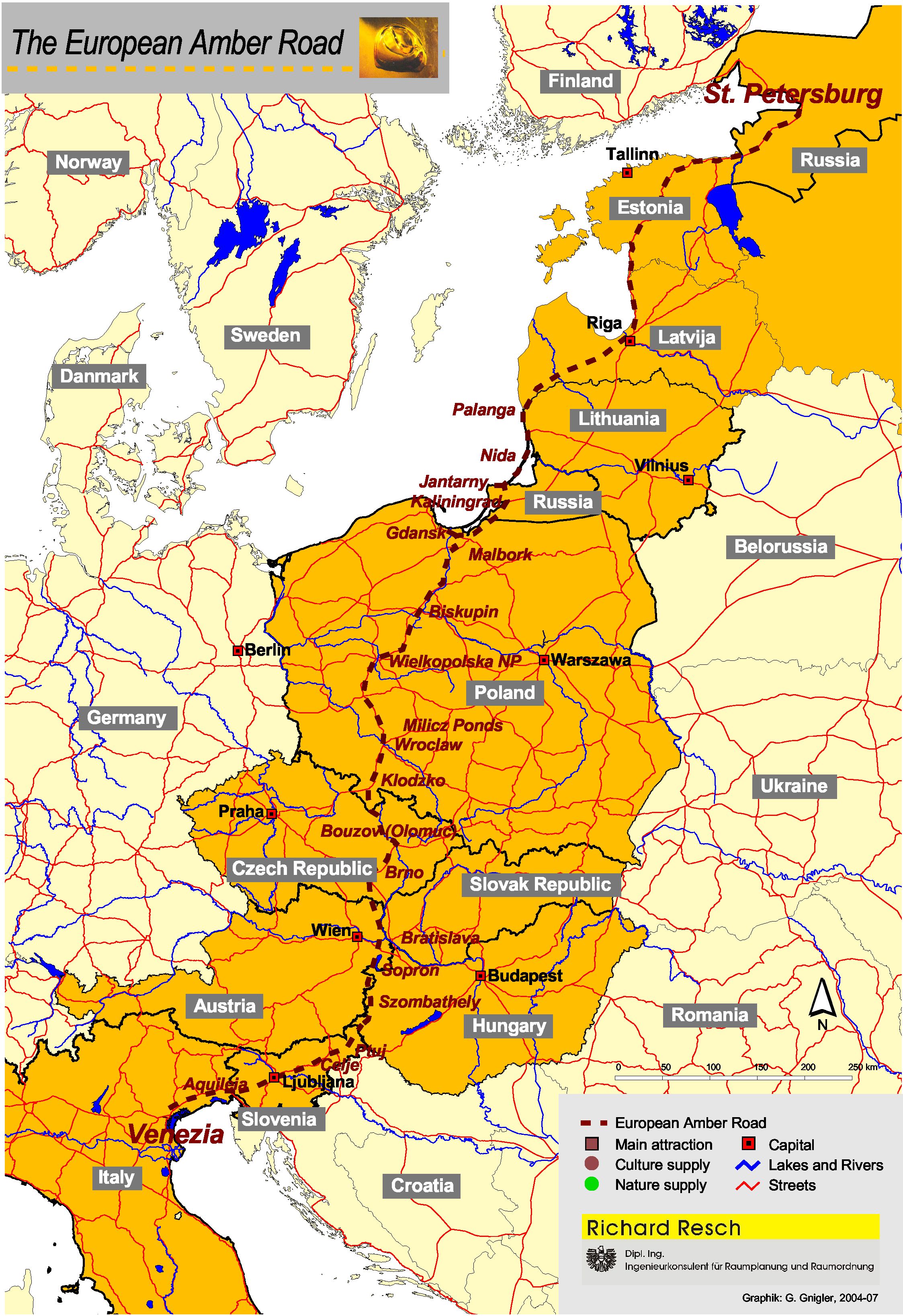
As written in my last month issue the Romans reached what is now southern & central Poland as merchants using the "Amber route", but also as legionaries.

Indeed archeologists have recently done discoveries that confirm the military presence of the Romans in the area north of the Oder river (see https://www.thefirstnews.com/article/romans-roamed-the-kujawy-region-of-poland-new-discoveries#:~:text=An%20unprecedented%20discovery%20has%20for,than%20had%20previously%20been%20assumed.) and also near the village of Malawa near the border with Ucraine (see https://www.express.co.uk/news/science/1380625/ancient-coin-archaeology-roman-emperor-hadrian-denarius-poland-evg).

The "amber route" in Poland. The city of Kujamy is near Biskupin
Additionally it is noteworthy to pinpoint that also in the area od what is now southern-central Poland there are evidences of Roman military presence: numerous Roman military artifacts dating as far back as the 1st century A.D. have been unearthed in Kujawy, central Poland.

This is a region in the Vistula basin far outside the boundary of imperial Rome even at its greatest extent under Trajan in the early 2nd century.

According to historian Cassius Dio, Roman cavalry may have made in appearance in what is now Kujawy in the late 1st century, and it was the "Lugii" themselves who called this cavalry.

Around 91 AD, the german tribe of the "Lugii" (related also with the "Vandals") made an alliance with Rome and asked the emperor Domitian to send troops to aid in their fight against the "Suebi" tribe. Domitian agreed in a desultory fashion and sent a measly 100 horsemen. Dio does not mention them any further, so there’s no way to know if they arrived, fought, returned or anything else. The territory of the Lugii, as far it can be determined, seems to have extended further to the south of modern-day Kujawy, so even if the horsemen went to their aid as promised, they could well have been a long way away from the find site. If they did make it, they would be the first Roman soldiers recorded in what is today Poland.

Furthermore, Pliny mentions Nero sending a trading expedition to the Baltic, but nothing about a military escort. Still, a highly valued trade route, like the "Amber route" winding through the territories of many and varied tribes with little political stability and a tendency to engage in hostilities, could certainly have used some securing. The Kujawy might be evidence that Rome sent legions to keep the amber coming.

In 2018 Polish archaeologists found traces of Roman presence in Kujawy to treasure hunters, who donated some of their findings. The majority of discovered artefacts comes from the area between the villages of Gąski and Wierzbiczany (Kuyavian-Pomeranian province of Poland).

"This is the first strong evidence of the actual presence of Roman soldiers in the territory of today`s Poland" - believes Dr. Bartosz Kontny of the Institute of Archaeology, University of Warsaw.

Among the unique monuments are metal pendants that decorated the straps of the Roman horse gear. They were in the shape of phalluses or vulvas (female womb). "These amulets were believed to ensure happiness and protect against evil forces, they had apotropaic meaning" - said Dr. Kontny. As a truly unique object among the analysed artefacts, the archaeologist mentions a gold-plated copper application for a hip belt. It depicts a spear of a beneficiarius, a high-ranking officer of the Roman army. "It was an attribute of his power" - says the archaeologist.

Such a large accumulation of similar Roman objects in other places in the barbarian Europe -like in central Germany (where, for example, the local population was recruited to the legions)- is clearly associated with physical Roman presence.

Finally, two Roman coins were discovered in 2016 – one in Lelów and one in Borowa – during archaeological research on the "Przeworsk culture" settlements in these villages. Both villages are located in the region of Częstochowa, Silesian Voivodeship near Krakow: Lelów, in the Upper Pilica Basin, and Borowa, in the Liswarta Basin. Other stray groups of Roman coins, obtained via activity by treasure hunters, have been registered in this region. Roman coin finds from this area are like in other parts of Lesser Poland ( https://www.archaeology.org/news/8577-200407-poland-roman-coins and all this shows a possible (or certain, according to some scholars) presence of roman merchants -and may be soldiers- in the area.

Possible legionary presence in southern Poland

In 172 AD roman emperor Marcus Aurelius conquered western Slovakia, attacking & subjugating the local Marcomanni and the Quadi. But in 177 AD, the Quadi rebelled, followed soon by their neighbours, the Marcomanni and Marcus Aurelius once again headed north, to begin his second Germanic campaign (secunda expeditio germanica). He arrived at Carnuntum in August 178 AD, and set out to quell the rebellion in a repeat of his first campaign, moving first against the Marcomanni, and in 179-180 AD against the Quadi.

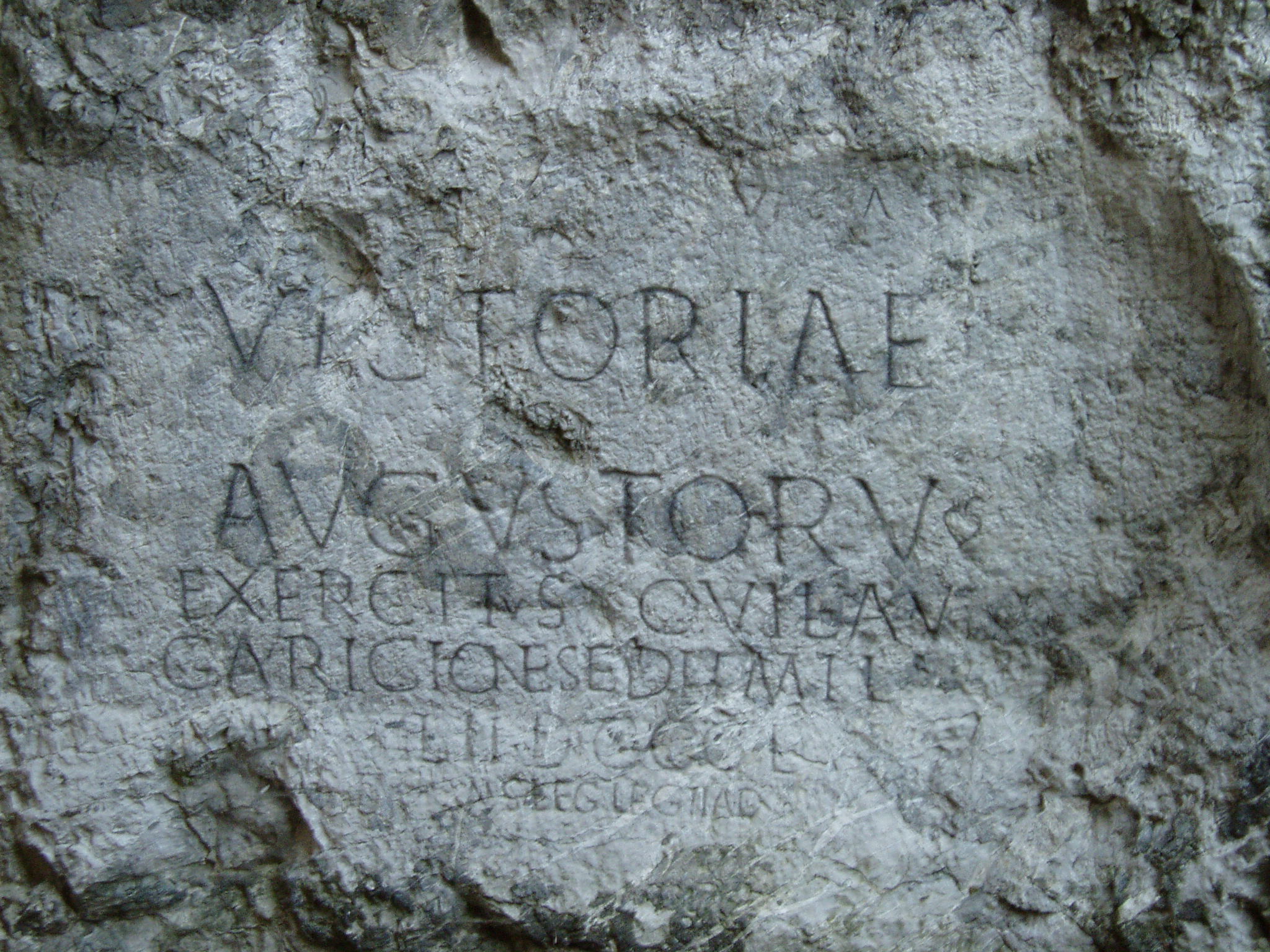
A Roman inscription in Laugaricio, ordered by Marcus Valerius Maximianus, near the border Slovakia-Poland (178–179 AD). The inscription marks the -certain- northernmost roman presence in this area of central Europe.


Under the command of Marcus Valerius Maximianus, the Romans fought and prevailed against the Quadi in a decisive battle at Laugaricio (modern Trenčín, Slovakia, near the border with Poland). The Quadi were chased westwards, deeper into Greater Germania and probably the "Auxiliary of Legion II" reached the Oder river in what is now Poland, where the praetorian prefect Tarutenius Paternus later achieved another decisive victory against them. But on 17 March 180, the emperor died at Vindobona (modern Vienna) -because of plague- and the Romans went back south of the Danube river.

The place of this victory of Tarutenius Paternus has not been identified, but it seems to have happened around the city of Katowice. Some roman vestiges of military material has been discovered in 2022 in the area. However there are researches going on, made mainly by Slovakian and Poland archaeologists in 2025 (read: https://archaeologymag.com/2025/02/roman-sword-found-in-southern-poland/ ; https://www.ancient-origins.net/news-history-archaeology/roman-burial-kazimierza-wielka-0021466  and https://allthatsinteresting.com/ksiezpol-poland-roman-coins).

Map of the roman empire under Augustus, showing the "client states" of the Marcomanni/Quadi and the Semnones (a german tribe who probably occupied the territories around the southern Oder river, now in southwestern Poland)

Thursday, June 2, 2022

ROMANS IN SLOVAKIA & SOUTHERN POLAND (1)

Romans in Slovakia & southern Poland

In the last years I have researched the presence of Romans in the extreme areas of their empire (like in northern Europe) and I have also studied their commerce & explorations outside their ruled territories (like in India). From Rafta in south-eastern Africa to Finland, at the end of this essay the readers can find the links to all the essays I have done on this matter. So, after having researched the Romans in Slovakia (published also in en.wikipedia), now I want to research -further north- about the Romans in northern Slovakia and southern Poland.

We have to remember that Roman merchants went to what is now Poland when they did the "amber way" to the Baltic sea. But there are a few books about their military presence in southern Poland, south of ther Oder river.

In light pink the area temporarily occupied by the Romans in 178-179 AD, that was supposed to be the new Roman Province of "Marcomannia"

Nearly all we know is about the tentative of emperor Marcus Aurelius to create the provinces of "Marcomannia" and "Sarmatia" in what is now Slovakia: the area of possible conquest in Marcomannia reached southern Poland, south of the Oder river (in what is now Slesia).

The Romans and their armies initially occupied (during Augustus) only a thin strip of the right bank of the Danube and a very small part of south-western Slovakia (Celemantia, Gerulata, Devín Castle). Tiberius wanted to conquer all Germania up to the Elbe river and in 6 AD did a military expedition from the fort of Carnuntum to Musov and beyond, but was forced to stop the conquest because of a revolt in Pannonia.

Only in 174 AD did the emperor Marcus Aurelius penetrate deeper into the river valleys of Váh, Nitra and Hron, where there are some Roman marching camps like "Laugaricio". On the banks of the Hron he wrote his philosophical work "Meditations" The little Roman forts of Zavod and Suchohrad in the Morava river showed a tentative of penetration toward northern Bohemia-Moravia and the Oder river (and perhaps southern Poland).

The latest archaeological discoveries which have located new Roman enclosures in the surroundings of Brno led to the conclusion that the advance of Roman troops from Carnumtum could have run further to the north-east, into the bordering region between Slovakia and Poland. Indeed recent archaeological excavations and aerial surveying have shown further locations in northeast Moravia: three temporary Roman camps (possibly connected to the Laugaricio fort) situated in the foreland of the so called Moravian Gate (Olomouc-Neředín, Hulín-Pravčice, Osek) have been partly corroborated, the former two clearly by digging.

Marcus Aurelius wanted to create a new Roman Province called "Marcomannia: on those conquered territories, but his death stopped the project. His sucessors abandoned those territories, but -with the exception of Valentinian I- maintained a relative friendly relationship with the barbarians living there (who enjoyed a small "cultural Romanization", that can be seen in some buildings around actual Bratislava in Stupava).

Indeed, the romanisation of the barbarian population continued in the late Roman period (181-380 AD). Many Roman buildings (with plenty of trade evidences of roman civilization) appeared on the territory of south-western Slovakia (Bratislava - Dúbravka, Cífer - Pác, Veľký Kýr) in the relatively peaceful period of the 3rd and 4th centuries. These were probably residences of the pro-Roman Quadi (and may be Marcomanni)

aristocracy. Romans in the late fourth century were able to bring christianity into the area: the germanic population of the Marcomanni converted when Fritigil, their queen, met a Christian traveller from the Roman Empire shortly before 397 AD. He talked to her of Ambrose, the formidable bishop of Milan (Italy). Impressed by what she heard, the queen converted to Christianity.[11][12] In the Roman ruins of Devín Castle, the first Christian church located north of the Danube has been identified, probably built in the early fifth century. A few years later Attila devastated the area and started the mass migrations that destroyed the Western Roman Empire. Meanwhile the area was beginning to be occupied by slav tribes.

Indeed the first written source suggesting that Slavic tribes established themselves in what is now Slovakia is connected to the migration of the Germanic Heruli from the Middle Danube region towards Scandinavia in 512 AD. This year, according to Procopius, they first passed "through the land of the Slavs", most probably along the river Morava. A cluster of archaeological sites in the valleys of the rivers Morava, Váh and Hron also suggests that at the latest the earliest Slavic settlements appeared in the territory around 500 AD. They are characterized by vessels similar to those of the "Mogiła" group of southern Poland and having analogies in the "Korchak" pottery of Ukraine.

In those same years disappeared the Roman presence from the Danube limes area, but there it is the remote possibility that Romans and those early slav tribes (who were the first "Slovakians") interacted commercially.

A Roman inscription in "Laugaricio", ordered by Marcus Valerius Maximianus, at the castle hill of Trenčín (178–179 AD) located a few dozen kms from the border with Poland. From Laugaricius the praetorian prefect Publius Tarrutenius Paternus moved to fight the Quadi near the Oder river in southern Poland.

It is noteworthy to pinpoint that near the northernmost line of the Roman hinterlands, the "Limes Romanus", there existed the winter camp of Laugaricio (modern-day Trenčín in actual Slovakia), where the Auxiliary of Legion II fought and prevailed in a decisive battle over the Germanic Quadi tribe in 179 AD during the Marcomannic Wars. Laugaricio (not far from the actual Poland-Slovakia border) is the most northern evidence of the presence of Roman soldiers in central Europe.

Romans in Slovakia (brief detailed History)

Emperor Augustus reached the Elba river with his legions, but after his terrible defeat at the Teutoburg Forest battle he went back to the Rhine river. However he had a client state between the Elba and the Oder river that probably reached actual Slesia in western Poland. We don't know anything about this first contact betrween Romans and the barbarians of this Poland region.

Under the emperor Marcus Aurelius a peace treaty was signed with the Quadi and the Iazyges (german tribes who lived in former "Cecoslovakia"), while the tribes of the Hasdingi, the Vandals and the Lacringi became Roman allies.

In 172 AD, the Romans crossed the Danube into Marcomannic territory. Although few details are known, the Romans achieved success, subjugating the Marcomanni and their allies, the Varistae or Naristi and the Cotini. This fact is evident from the adoption of the title "Germanicus" by Marcus Aurelius, and the minting of coins with the inscription "Germania capta" ("subjugated Germania"). During this campaign, the chief of the Naristi was killed by the Roman General Marcus Valerius Maximianus.

In 173 AD, the Romans campaigned against the Quadi, who had broken their treaty and assisted their kin, and defeated and subdued them.

By late 174 AD, the subjugation of the Quadi was complete. In typical Roman fashion, they were forced to surrender hostages and provide auxiliary contingents for the Roman army, while garrisons were installed throughout their territory.


After this, the Romans focused their attention on the Iazyges living in the plain of the river Tisza (expeditio sarmatica). After a few victories, in 175 AD, a treaty was signed. According to its terms, the Iazyges King Zanticus delivered 100,000 Roman prisoners and, in addition, provided 8,000 auxiliary cavalrymen, most of whom (5,500) were sent to Britain. Upon this, Marcus assumed the victory title "Sarmaticus".

Marcus Aurelius may have intended to campaign against the remaining tribes, and together with his recent conquests establish two new Roman provinces, Marcomannia and Sarmatia, but whatever his plans, they were cut short by the rebellion of Avidius Cassius in the East.

In 177 AD, the Quadi rebelled, followed soon by their neighbours, the Marcomanni, and Marcus Aurelius once again headed north, to begin his second Germanic campaign ("secunda expeditio germanica"). He arrived at Carnuntum in August 178 AD, and set out to quell the rebellion in a repeat of his first campaign, moving first against the Marcomanni, and in 179–180 AD against the Quadi. Under the command of Marcus Valerius Maximianus, the Romans fought and prevailed against the Quadi in a decisive battle at "Laugaricio" (near modern Trenčín, Slovakia). The Quadi were chased westwards, deeper into Greater Germania (reaching the Oder river), where the praetorian prefect Publius Tarrutenius Paternus later achieved another decisive victory against them, but on 17 March 180 AD, the emperor died at Vindobona (modern Vienna).

His successor Commodus had little interest in pursuing the war. Against the advice of his senior generals, after negotiating a peace treaty with the Marcomanni and the Quadi, he left for Rome in early autumn 180 AD, where he celebrated a triumph on October 22.

In the next centuries Romans never crossed again the Danube in order to conquer areas of today's Slovakia. The only exception was in 358 AD and mainly in 372-375 AD, when emperor Valentinian I devastated the area of actual southwest Slovakia and ordered the construction of castra (still not discovered) around the Celemantia roman fort at actual Iža. He did this even in order to defend the territory from the incoming Hun invasions.

Romans in southern Poland

Romans reached what is now southern Poland mainly as merchants using the "Amber way" toward the Baltic, but it seems that also legionaries were present in actual Slesia during Marcus Aurelius campaigns in central Europe (read my next month article for further information).

Monday, May 2, 2022

LAST ITALIAN SPEAKERS IN THE HORN OF AFRICA

The kingdom of Italy conquered Ethiopia in 1936 and established the "Impero italiano" in the horn of Africa with the addition (to Ethiopia) of the former italian colonies of Eritrea and Somalia. Many italian colonists moved to live in this empire, where the italian language was the official. Additionally the colonial population started to create an italian pidgin, that in some cases existed until the XXI century (like in Eritrea and Somalia).

1940 Map of the Italian empire in the horn of Africa, where Italian was the official language


It should be noted that the number of Italian citizens permanently resident in the Horn of Africa is now very small: according to the official data of the Italian "Ministero dell' Interno" -written in the "Statistical Yearbook 2018"- there are 352 italian families in Eritrea, 852 in Ethiopia and just 4 in Somalia.

Above all in relation to the very serious events that -starting from colonial experience- these three African countries suffered in the last century, the current presence of Italians in the Horn appears to be very little, constantly decreasing and almost entirely concentrated in the main urban centers.

But there it is a group of Italian speakers in Africa who do not appear in the censuses of Italians abroad: that of the so-called mixed-breed "mulatti" (nearly all born during colonial times) and their sons and descendants (born after WW2). They were in the late 1950s -aproximately, because there are not precise statistics- more than 5000 in Eritrea, nearly 10000 in Somalia and perhaps 1000 in Ethiopia.

Indeed the number of births (in the newly created italian empire) from mixed couples in italian colonial times is difficult to quantify: a census dated 1938 counted 2,518 but according to some sources it is a very underestimated hypothesis: some researchers think that the amount can be more than seven times bigger.

The following are the mulatto data for the 3 italian colonies of the empire in the horn of Africa:

ERITREA. It is estimated that in Eritrea alone there were more than 5,000 mulatto children abandoned by Italian fathers: some of these were not recognized by choice, others because of the racial laws that starting from 1937 (Royal Decree 19 April 1937, n. 880 converted with modification of the Law of 30 December 1937, n. 2590), prohibited the relationships "of a marital nature" between the Italian citizens and the subjects of the colonies and in 1940 they were further burdened by the Rules relating to mulattos (Law no. 822 of 13 May 1940) which prohibited the Italian father from recognizing a half-white child (often called "Italo-eritrean").

At the present time it is believed that the Italian-Eritreans without Italian citizenship, in some cases for decades waiting to obtain it, are about 300: often the poor economic conditions do not allow them to face the legal costs necessary to complete the complex application to get italian passport.

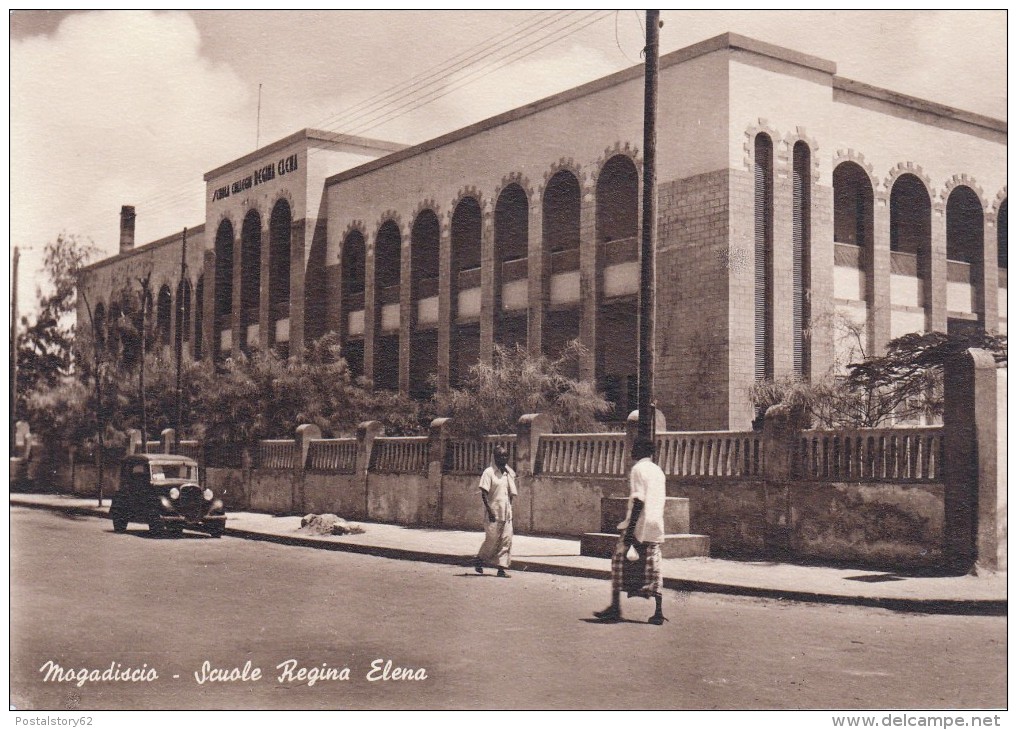
SOMALIA.During the 1920s & 1930s nearly 10,000 children were born from Italians (mainly soldiers) and Somalian native girls during the more than half a century of colonial presence in Italian Somalia. Most of them lived in the Mogadishu area & hinterland. Indeed in Mogadiscio in the 1920s and early 1930s there were 4 Italian men for every Italian woman and as a consequence was common the "Madamato" (relationship between Italian soldiers and native.

Nearly 7,000 children were born from the "Madamato" in the Mogadiscio area: they were mulattos who received Italian citizenship when baptized as catholic. But after 1939 the Italian Fascism -since 1938 linked to the German Nazism- imposed harsh racial rules against this Madamato. However, all the 7000 "mulattos" were given italian passports after WW2, while most of them spoke the italian language and/or the pidgin italian of Somalia.

ETHIOPIA.In 1940 Addis Ababa (capital of Ethiopia) the number of new-born Italian babies was continually growing after the italian conquest of Ethiopia, rising from 50 in 1937 to 570 in 1939 and the number of weddings being celebrated shot up too, despite the dramatic housing shortage (https://dadfeatured.blogspot.com/2018/12/italian-addis-abeba.html). Italians lived in all possible ways: many continued to live in temporary shelters (tents, huts and prefabricated houses), whilst a lot of families used indigenous homes that had been expropriated or rented. A consequence was that many "mulattos" (from italian soldiers and native ethiopian girls) were born in those years: some researchers -like Dertia and D'Ambrosio- think than more than a thousand italo-ethiopian were born in the nearly six years of italian occupation of Ethiopia (1936-1941).

Mussolini found this situation intolerable, and he constantly urged the Italian East Africa’s government to ensure a more vigorous policy of racial separation (on his orders the African market had been forbidden to Europeans, but the measure was later withdrawn, because indigenous trade was indispensable for the provision of food by whites).

Those mulattos in some cases were given italian passports after the end of WW2, but only a few of them (probably less than 100) spoke italian or the pidgin italian of Ethiopia.

Finally we have to remember that in the Italian Empire (made of Italian Eritrea, Italian Somalia and the conquered Ethiopia) in june 1940 there were 170000 italian colonists, a huge increase from the 6000 (4188 in Eritrea, 1668 in Somalia and just 100 in Etiopia) in spring 1935. But only 35000 remained after the end of WW2, even because of the return to Italy of 28000 women & children with four ships in 1942/1943 (read: https://www.ammiragliovincenzomartines.it/storia_della_medicina_militare_1942_rimpatrio_civili_africa_orientale_italiana.html). All this made a huge decrease in the use of Italian language in the Horn of Africa.

Additionaly, it is noteworthy to pinpoint that in the 2020s there are only a few hundreds of italian speakers in the countries that were in the former "Italian empire". But many thousands natives are able to understand (and also speak) the italian language.....and someone also remembers the local pidgin italian (please read my https://researchomnia.blogspot.com/2022/03/italian-language-in-italys-colonies.html).

Saturday, April 2, 2022

THE PIDGIN ITALIAN OF SOMALIA

There was the existence of a "pidgin" Italian in the Mogadishu area during the 1940s, 1950s, 1960s, 1970s and 1980s, according to academic Mauro Tosco. But actually it has disappeared since the 1990s civil war in former Italian Somalia.

As we all know a "pidgin" of a language is a "kind of dialect" spoken by people in a country (often a colony) that has a mother language different from the one of the rulers and that uses "mixed" loanwords from this rulers' language while creating a new language. Practically all the neolatin languages -to give an example- were initially pidgins of latin and successively developed in modern French, Spanish, Portuguese, etc...

The Somalia president Siad Barre talking to the italian engineer Luciano Travaglia in the 1970s. Barre was able to speak perfectly in Italian language (https://www.youtube.com/watch?v=UiAIswl9AvQ) and also in "Pidgin italian of Somalia"
A pidginized Italian of Somalia?

Banti is probably the only existing analysis of Italian as spoken in Somalia based upon a corpus of actual sentences. Banti's corpus was written in 1990 and was very small and drawn from two speakers only, namely, two Somali women employed as house workers by Italian expatriates in the eighties. A simplified and unstable form of Italian -according to Banfi- very probably continued to be in use among uneducated Somali when entering in contact with the Italian community. It is also possible that its use was actually boosted in the seventies and eighties: formal education in Italian was no longer available, while the number of educated Somali of the older generations (often speaking “good” Italian) and of Italian residents (many of them with a certain command of Somali) was slowly decreasing.

At the same time, there was a burgeoning number of Italian expatriates working in technical cooperation and education, many of them spending relatively short periods of time in the country.......Certainly the points in common between this "simplified Italian of Somalia" and the "Restructured Italian Pidgin of Eritrea" are striking: is there a common origin? This seems to be the answer adumbrated by Banti, who hints at a "common tradition” rather than to "parallel developments”, without further elaboration. One can hypothesize that the Eritrean troops deployed to Somalia by the Italian authorities during the colonial times may have acted as middlemen in the acquisition of a modicum of Italian on the part of Somalis, especially in Mogadishu.

Actually there are many loanwords from the italian language in the somalian language: for example all the months of the year are from the italian. But the greatest influence of the italian language is in the use of the latin alphabet: the somalian language is written with the vocals and consonants of the latin language.

As I wrote last month in my "Italian language in Italy's colonies", The pidgin spoken in Italian Somalia was important in the capital Mogadiscio and in some minor cities (like in the Merca/Villabruzzi). For further information about "Mogadiscio italiana" read https://dadfeatured.blogspot.com/2018/05/italian-mogadishu.html.

The italian language was undertood by nearly all the native inhabitants of Mogadishu in 1941, while half of them was able to speak in Italian using the Somali Pidgin Italian.

The following are possible percentages of the 1940 use of pidgin by the native population (together with their own language) in the italian colonies of Africa. The percentages have a five percent increase or reduction value, according to historian E. Aiello:

------------------------------------------------------------------------------------------------------------------------------

Colony............percentage of natives speaking Pidgin.............................only in the capital area

Eritrea................................64%................................................................95% (Asmara)

Libya..................................51%................................................................91% (Tripoli)

Somalia..............................42%................................................................84% (Mogadiscio)

Ethiopia..............................10%...............................................................26% (Addis Abeba)

------------------------------------------------------------------------------------------------------------------------------

As can be read above, in 1940 Mogadicio the 84% of the native somalian population spoke the Somalian Pidgin Italian (together with their Somalian language), while in all Somalia the 42% was able to use this pidgin.

However we must remember that the Aiello's percentages are not confirmed by precise & detailed research and can be wrong (but -in my opinion- they give an aproximate idea, more or less real & correct).

The pidgin italian of Somalia is similar to the pidgin italian of Eritrea, because many eritrean colonial troops were in Italian Somalia in the 1930s and these soldiers interacted with the civilian native population of Somalia speaking with "italianised" words that could be understood by everybody.....and so these words and sentences were accepted by the Somalians in their pidgin.

Indeed in the Italian pidgin of Somalia it is common the use of Italian participles as past or perfective markers. It seems reasonable to assume that these similarities have been transmitted through Italian "foreigner talk" stereotypes.

Two examples of full similarity between the Italian Pidgin of Eritrea and the one of Somalia:
1) luy andato lospεdale; in Italian: È andato all’ospedale (in English: he has gone to the hospital)
2) o bεrduto soldi ki tu dato bεr me; in Italian: ho perso i soldi che mi hai dato (in English: I have lost the money you gave me)

Given the prolonged Italian presence in Somalia, that lasted nearly one century and that began with Italian colonisation, continued with the Italian Trust Administration first and then with university collaborations at the time of the independence regime, the Italian lexicon - especially in the technical-scientific field - is present in the somalia language with many recent loanwords, often created at the desk during the compilation of technical-scientific manuals, as part of the “Somalisation” campaigns of the specialized lexicon. And this lexicon -of course- was present also in the pidgin of Somalia.

Finally, even if this pidgin has disappeared (but a few very old Somalians -in their eighties or nineties- still remember it in the 2020s), according to the linguist Mauro Tosco "an italian, and therefore romance, layer will certainly remain in the Somalian language". For further information, please read Tosco's "A case of weak romancisation in East Africa": https://www.academia.edu/3152863/A_case_of_weak_Romancisation_Italian_in_East_Africa?email_work_card=reading-history.

Sunday, March 6, 2022

ITALIAN LANGUAGE IN ITALY'S COLONIES

Like some other European countries, during the first half of the XX century Italy occupied a number of territories around the world, though most of these colonies were located in Africa. In those where the Italian presence has been longer and more pervading, Italian language was still spoken (until the brginning of the XXI century) as a second language (e.g. in the Dodecanese, now part of Greece) or in a corrupt form (Simplified Italian of Ethiopia & Pidgin Italian of Eritrea and Somalia; for further information read this essay of Bernini: http://www00.unibg.it/dati/corsi/3415/43993-lap_1011_03_pidgin_italiani.pdf)


The "Asmara Caffe" on Harnet Avenue of Asmara (Eritrea) is famous for Italian-style cappuccino and pastries. It has the italian word "caffe", that means 'coffee'

Nevertheless, given that many years have passed since Italy’s colonizing mission, today the number of speakers of Italian is steadily decreasing. However it is also noted that many loanwords still remain, phonetically adapted and incorporated in languages such as Libyan Arabic, Eritrean, Amharic, Oromo, Gawwada, Saho, Tigrinya and Somali (among others). The goal of this research is to give an overall view of the main of these languages and their "pidgins" linked to the italian language.

As we know, the Kingdom pf Italy -after the unification of Italy- started a process of colonization in Africa (and secundarily in China) that was able to create an empire when Ethiopia was conquered in 1936. So, in 1913, when Ethiopia had not yet been taken, Italy controlled about 4% of the total colonial areas occupied by Europeans. To give an idea of the Italian situation, just think that Great Britain - at the time the European power that held the primacy of colonized lands - at that time was in possession of 60% of the total. That means that the italian empire was the last of the european empires and its linguistic heritage was not huge, but noteworthy.

The colonies where more the italian was "loanworded" are Libya, Eritrea and Somalia. But there was also a relatively strong influence in Ethiopia. Also it is noteworthy to pinpoint that in Greece the italian was very important in the italian dodecanese islands (like Rodi) and also in Corfu (where there it is an historical venetian-speaking community since the Middle Ages: read https://dadfeatured.blogspot.com/2019/03/corfiot-italians.html).

As has been observed, the effects of Italian colonization in the linguistic field have not yet been fully studied. Even the immense work done by Abdu (Abdu, Hussein Ramadan, “Italian loanwords in colloquial Libyan Arabic as spoken in the Tripoli region”) is incomplete: suffice it to note that it is based entirely on the dialect spoken in Tripoli (Libya), which will inevitably be different even only from that of Benghazi, without mentioning the Libyan hinterland. Not to mention the fact that studies of this type are still to come for Assab, Massawa, Addis Ababa and Mogadishu.

However, with the data collected with the few researches it is possible to try to draw some conclusions. First of all, it is confirmed that the linguistic history of the Dodecanese has followed paths that are quite different from that of Africa. In these small islands, Italian has been taught in a customary way and learned by the population, who in some cases still speak it (also for reasons of convenience due to tourism or personal pride).

On the African side, on the other hand, we distinguish the "pidgin" that came to be created in the "Horn of Africa", which has not been documented very well in more recent times and whose traces seem to have been lost, only to receive confirmation of its vivacity. An in-depth study should absolutely be devoted to this topic, by doing research directly on site and trying to interview as many native speakers as possible to gather new and updated data.

As for the borrowings in the languages of the former colonies, we have seen how many of the words - above all those relating to certain areas, such as mechanics, are almost identical. This is partly due to loans that have taken place over the years between the native language themselves, but also from the fact that these terms of Italian origin have found an "empty space" to fill. Also with regard to loans, an in-depth study is urgently needed for each language (as well as for those that remain excluded, primarily the Ethiopian "Tigre'"), which verifies the updating of the lists reported here and possibly expands them. We have noticed how in many cases Italian loanwords are productive and have led to the creation of new verbs and idioms: it could be interesting to deepen this aspect.

Of all the languages in the Italian empire, the one that would perhaps deserve more attention in the future is "Somali". Given the prolonged Italian presence (from before 1880 to 1960), which began with colonial rule, continued with the Italian trust administration first and then with university collaborations at the time of the regime, the Italian-Italian lexicon - especially in the technical-scientific field - is present with very recent loans, often created at the desk during the compilation of technical-scientific manuals, in the context of “Somalisation” campaigns of the specialized lexicon.

In short, there are still many traces of the Italian colonial experience in Africans and their languages.

Finally, it is important to remember that the italian language left some loanlords also in countries (not classified as "colony" because european) temporarily occupied by the kingdom of Italy, like Albania (that was united to Italy from 1939 to 1943) and Slovenia (the "Provincia di Lubiana" was a province of Italy from 1941 to 1943).

A pidgin: the simplified Italian of Ethiopia

During the entire period of Italian stay, the locals found themselves in the situation of having to communicate with the occupants in a typically colonial context. The Italian used was limited to the vehicular language of daily relations between servant and master, especially in the workplace (even if not alone. Certainly, however, the two interlocutors were always on two different levels, one subordinate to the other). This is, in fact, the typical context in which a pidgin is created.

The pidginized variety of a language is in fact formed when there is a reduced linguistic input provided by native speakers (the limited teaching of Italian to the population, in this case), when there is no shared language and the cultural and social distance between the speakers is considerable, but nevertheless there is a need to communicate. The lexical material available is re-analyzed and restructured in such a profound way that a pidgin may even no longer be understandable to the native speaker of L1 (or first used language, but this is not the case here), even if the language on which it is based it is usually easily identifiable and is defined lexicalizing language.

If a pidgin consolidates itself and is learned as a mother tongue by the new generation of speakers, then one can speak of Creole. In the case of the Horn of Africa, this seems to have happened for at least one generation, and then regressed. Judging from the literature, after having been used for a certain period even by non-Italians to communicate inter-ethnic contacts, this pidgin would seem to have disappeared today, given that it is no longer mentioned, but from other sources (like professor Andrea Tarantola) we learn that "the Italian pidgin is alive and variable in diachrony and synchrony".

Indeed it is noteworthy to pinpoint that this pidgin was very important in the capital of Ethiopia (for furter information read https://dadfeatured.blogspot.com/2018/12/italian-addis-abeba.html).

The Phonology of the simplified Italian of Ethiopia is characterized by interference from Tigrinya and Amharic, the two Semitic languages spoken respectively in southern Eritrea and central-northern Ethiopia by the majority of the population

The following are possible percentages of the 1940 use of pidgin by the native population (of course togheter with their own language) in the italian colonies of Africa:

The following are possible percentages of the 1940 use of pidgin by the native population (together with their own language) in the italian colonies of Africa. The percentages have a five percent increase or reduction value, according to historian E. Aiello:

------------------------------------------------------------------------------------------------------------------------------

Colony............percentage of natives speaking Pidgin.............................only in the capital area

Eritrea................................64%................................................................95% (Asmara)

Libya..................................51%................................................................91% (Tripoli)

Somalia..............................42%................................................................84% (Mogadiscio)

Ethiopia..............................10%...............................................................26% (Addis Abeba)

------------------------------------------------------------------------------------------------------------------------------

The following are excerpts from the essays written by Bruno D'Ambrosio about the italian Pidgin created in Eritrea, Somalia and Libya and that were partially published on Wikipedia:

Eritrean Pidgin Italian

Eritrean Pidgin Italian (or Italian Eritrean, as is often called) was a pidgin language used in Italian Eritrea (and until the 1970s in the Asmara region) when Eritrea was a colony of Italy.

This pidgin started to be created at the end of the 19th century and was fully developed in the 1930s. It had similarities with the Mediterranean Lingua Franca. Michael Parkvall wrote that: "Indeed Lingua Franca also seems to have affected other languages. Eritrean Pidgin Italian, for instance, displayed some remarkable similarities with it, in particular the use of Italian participles as past or perfective markers. It seems reasonable to assume that these similarities have been transmitted through Italian "foreigner talk" stereotypes" (Mikael Parkvall. "Foreword to A Glossary of Lingua Franca". Editor Alan D. Corré. Milwaukee-United States, 2005).

In 1940 nearly all the local native population of Asmara (the capital of Eritrea) spoke the Eritrean Pidgin Italian when communicating with the Italian colonists. Until the late 1970s this pidgin was still in use by some native Eritreans, but currently it is considered extinguished (even if a few old Eritreans still understand it in Asmara).

About the Italian Eritrean Habte-Mariam wrote that: “[…] at the initial stage of their contact […] It seems likely that the Italians simplified the grammar of the language they used with underlings at this stage, but they did not borrow vocabulary and grammatical forms from Amharic and Tigrinya, since it does not show up in the 'simplified Italian' used today”. Habte wrote that it was used not only between native Eritreans and Italians, but also between different tribes in Ethiopia and Eritrea.

The linguists G. Gilbert & Lionel Bender called this pidgin a "Simplified Italian of Eritrea" and wrote that:
"Simplified Italian of Eritrea" is definitely a pidgin; it is described by Habte as a “relatively variable form of Italian” (1976:179). Habte’s account of its sociolinguistic setting (1976: 170-4) and what we know of recent Eritrean history make it quite clear that it is not likely to become a creole, and in fact seems likely to die out within the next generation or two.

For them the Simplified Italian of Eritrea "has basic SVO order; unmarked form is used for nonspecific; stare and ce (from Italian) as locatives".

Finally it is noteworthy to pinpoint what wrote G. Montesano in his essay "La lingua italiana in Eritrea":

"The effect of Italian colonisation: unlike England, France, Spain and Portugal, Italy‟s colonial period lasted only a brief amount of time: a little less than seven decades. The influences brought about by Italian colonisation are particularly pronounced in Eritrea, where several linguistic phenomena occurred. In some cases, Italian words were grafted onto the local Tigrigna language in order to refer to modern creations; in others, a standardised form of Italian arose out of the multitudinous dialects spoken by Italian settlers from different regions" (read for further info: https://ciccre.uvt.ro/sites/default/files/qr/qr_iii_2_giampaolo_montesanto.pdf)

Somali Pidgin Italian

The pidgin spoken in Italian Somalia was important in the capital Mogadiscio and in some minor cities (like in the Merca/Villabruzzi). For further information about "Mogadiscio italiana" read https://dadfeatured.blogspot.com/2018/05/italian-mogadishu.html.

The italian language was undertood by nearly all the native inhabitants of Mogadishu in 1941, while half of them was able to speak in Italian using the Somali Pidgin Italian.

During the United Nations Trusteeship period from 1949 until 1960, Italian along with Somali were used at an official level internally, whilst the UN's main working language of English was the language used during diplomatic, international and occasionally for economic correspondence. After 1960 independence, the Italian remained official for another nine years. Italian was later declared an official language again by the Transitional Federal Government along with English in 2004. But, in 2012, they were later removed by the establishments of the Provisional Constitution by the Federal Government of Somalia leaving Somali and Arabic as the only official languages.

Italian is a legacy of the Italian colonial period of Somalia when it was part of the Italian Empire. Italian -of course- was the mother tongue of the Italian settlers of Somalia.

The Somalian school system in the colonial era before World War II was in Italian language and limited mainly to primary schools and a few middle schools (like the "Scuola Regina Elena": see photo below, done in the late 1930s).
But in the capital Mogadishu of "Italian Somalia" there was an important high school: The "Lyceum De Bono" of Mogadishu. In this Lyceum was created in the early 1950s the "National Institute of Legal, Economic and Social Studies", https://books.google.com/books?id=DPwOsOcNy5YC&pg=PR33&lpg=PR33&dq=National+Institute+of+Legal,+Economic+and+Social+Studies+in+1954+mogadishu&source=bl&ots=mP42GvAq5x&sig=yOpgFHBoJy27ENMYV3us-68jnJ4&hl=it&sa=X&ved=0ahUKEwjOgafixZ_bAhUILKwKHc4RB3MQ6AEITTAF#v=onepage&q=National%20Institute%20of%20Legal%2C%20Economic%20and%20Social%20Studies%20in%201954%20mogadishu&f=false, as a post-secondary school in Italian language for pre-university studies in order to access the Italian universities.

Although it was the primary language since colonial rule, Italian continued to be used among the country's ruling elite even after 1960 independence when it continued to remain as an official language (Video showing Somalian natives talking fluently in Italian after the Somalia independence: https://www.youtube.com/watch?v=W96tncBcItg). It is estimated that more than 200,000 native Somalis (nearly 20% of the total population of former Somalia italiana) were fluent speaking Italian and/or Somali Pidgin Italian when independence was declared in 1960.

After a military coup in 1969, all foreign entities were nationalized by Siad Barre (who spoke Italian fluently), including Mogadishu's principal university, which was renamed 'Jaamacadda Ummadda Soomaliyeed' (Somali National University). This marked the initial decline of the use of Italian in Somalia.

However, Italian is still widely spoken by the elderly, the educated, and by the governmental officials of Somalia. Prior to the Somali civil war, Mogadishu still had an Italian-language school, but was later destroyed by the conflict.

Libyan Pidgin Italian

There was an italian Pidgin in the colony of Libya, that survived until the 1980s. Libyan Italian is a name given to the Italian language used by native population in the North African nation of Libya.

Indeed Italian is a legacy of Italian colonial period when Libya was part of Italian North Africa. Of course it was the language of the Italians who settled in Libya. In 1940 Italian Libya, nearly half the native Libyans were able to speak Italian, but in Tripoli – and in downtown Benghazi - nearly all of them were fluent in the Dante language.

Although it was the primary language since colonial rule, Italian greatly declined under the rule of Muammar Gaddafi who expelled nearly all the Italian colonists population (and Italian-educated Libyans who were opposed to Gaddafi’s rule). The Libyan dictator returned Arabic to be once again the sole official language of the country.

Nevertheless, Italian is still spoken and understood to some degree by mainly some old people. After the National Transitional Council (NTC) has been responsible for the transition of the administration of the governing of Libya, returning Libyan refugees from Italy or Switzerland and their children who speak Italian introduced the language again in Libya (but only in some limited cities like the capital Tripoli).

Under the colonial regime, Italian was the language of instruction in schools, but only a scattering of Muslim children attended these institutions. As a consequence, the Italian language did not take root in Libya to the extent that French did elsewhere in North Africa. Nevertheless, the strong wave of nationalism accompanying the 1969 revolution found expression in a campaign designed to elevate the status of the Arabic language. An order was issued requiring that all street signs, shop window notices, signboards, and traffic tickets be written in Arabic. This element of Arabization reached its apogee in 1973, when a decree was passed requiring that passports of persons seeking to enter the country contain the regular personal information in Arabic, a requirement that was strictly enforced. U.S. Library of Congress: Libya

After the 1990s, practically disappeared the use of Italian language in Libya.

Language characteristics: While phonology and intonation are affected by Arabic, Libyan Italian is mostly based on the standard European form. The Italian lexicon used in Libya contains many loanwords of Arabic origin, including Islamic terms. Also, Libyan Italian can be seem to resemble the form and structure of Creole based forms of European languages.

Actually some loanwords from the Italian language have been assimilated into the Libyan Arab language, according to Saul Hoffmann. The most important are in the following list: https://en.wikipedia.org/wiki/List_of_Libyan_Arabic_words_of_Italian_origin