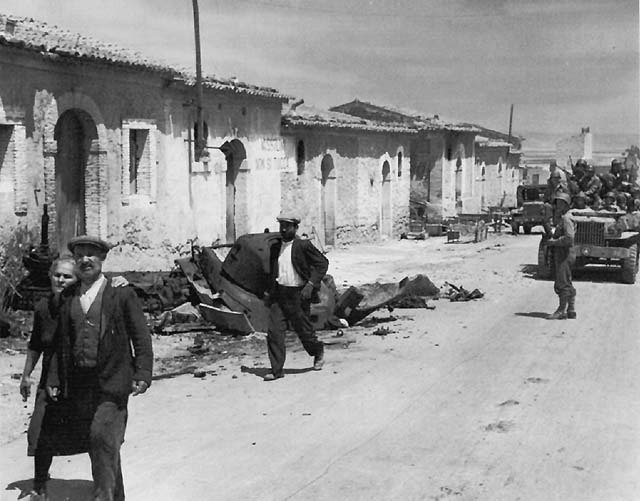
The conquest of Ethiopia radically modified Italian colonial policy, shifting it onto another level, that of the empire. The empire, in Mussolini’s opinion, was above all a spiritual goal towards which Italians should strive in order to avoid the fate of decadent Western people. The meaning attributed to the term transcended the mere material increase in the size of conquered territories, assuming an almost metaphysical character. Fascism’s idea of empire conceived a new totalitarian colonial policy, which included some common guidelines for the colonies (such as the racial hierarchy and the school programmes), thus overcoming the historical, political and cultural heterogeneity of the various dominions, and also taking into account that one of the principal objectives was to create large Italian communities overseas. To highlight the differences between the fascist model and the classic colonialism of the other European powers, and underline its communitarian outlook, jurists defined the fascist empire as a corpus mysticum made up of several parts which, however, «although they all concurred to reach the same common goals and though each obtained its own advantage», were not on the same level: first came Italy and Albania, followed by Libya and the Italian islands in the Aegean sea; Africa Orientale Italiana (AOI), made of Eritrea-Somalia-Ethiopia, came last.
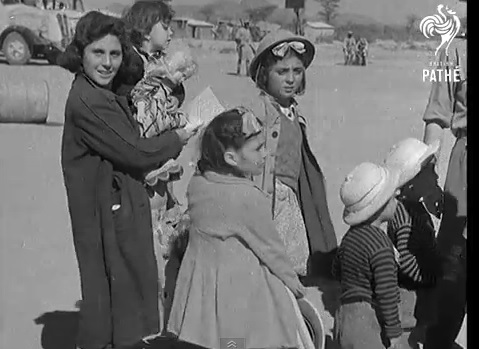
Photo of an Italian family in 1940 Ethiopia
Of course the elements concurring to make up the hierarchy of dominions were mainly racial and cultural. The administration of the territories was also differentiated: the Aegean Sea and Albania, which was part of the imperial community as an autonomous and independent entity associated to Italy, depended on the Foreign Ministry, whilst Libya and AOI depended on the Ministry for Italian Africa (Ministry of Colonies until 1937), which had purposely changed its name to underline the new way to conceive the relationship between the colonies and the motherland.
Between 1936 and 1940, in all its overseas possessions -including Albania and Rhodes- the fascist regime of the "Duce" Mussolini elaborated demographic colonization plans for the transfer of Italian colonists. The emigration of select Italian families represented one of the cornerstones of fascist policy. The common traits, which bore witness to the universal vocation of imperial policy (whose objectives were chiefly the shaping of the new Italian colonists as well as raising the degree of “Italianness” of indigenous populations), concerned the creation of schools both for Italian and autochthonous students; archaeological research; the diffusion of newspapers and magazines (including some in the local languages), the cinema, theatres and the radio; the spreading of Western and/or typically Italian lifestyles and leisure pastimes; the planning of an overseas Italian architecture; the founding of cultural and sports institutions.
The new Italian settlers enjoyed notably larger incomes compared to Italians back home. This modified their lifestyle, increasing the popularity of cultural and sports activities some of which, such as tennis and horse-riding, represented a rise in social status. This phenomenon also touched that part of the African population in direct contact with Italians. Schools and the Fascist Party (PNF) were the institutions in charge with the spreading of culture and sports. All tourist and sports facilities were either built by the government of by the PNF.
The Party (in Italian: "Partito Nazionale Fascista") looked after Italians’ leisure time through some collateral bodies: if the Institute of Fascist Culture, the Fascist University Groups (GUF) and the Italian Lictorian Youth (GIL) prevalently dealt with political and cultural indoctrination as well as physical education, the Working Men’s National Association (OND, Opera Nazionale Dopolavoro) played an important role in the involvement of its members in cultural, leisure and sports activities, which favored the aggregation of large numbers of people and the strengthening of the feelings of “Italianness”. The creation of the Arab Lictorian Youth (GAL) in Libya and the Indigenous Lictorian Youth (GIL) in East Africa also allowed the PNF to organize and form the younger natives. The diffusion of Western sports, such as football, in African schools or among the young members of GAL and GIL integrated the young subjects’ education.
The Italian Touring Club also played a crucial role in the empire’s cultural and tourist promotion, both by organizing trips and events, and above all through its own publications. Besides fascist institutions a remarkable number of sports, cultural and military associations helped to manage the colonists’ leisure time.
Imperial publications were generally published by the government or by the Fascist Party and therefore had an official character, but there were also some catholic magazines, whilst cinemas and theatres were growing in numbers. The cinema was also a formidable political and cultural tool in the process of assimilation of subject people, as the Under-secretary to the Italian Foreign Office, Zenone Benini, highlighted in one of his reports to Mussolini on Italian cultural penetration in Albania, though his remarks can be extended to all other dominions:
"....For the purpose of spiritual elevation, educational activities are and will be more and more supported […] by the action of those technical means, such as cinema and the radio, which are especially apt to take the educating voice of Italian civilization to the most isolated outposts […] To this aim […] several itinerant cinemas have been sent which, as well as broadcasting everywhere the beauty of Italian sights, provide the first recreational occasions for the masses....."
In AOI the "Duce" intended to create a new organic social system conjugating demographic colonization with other forms of valorization, transferring from Italy «the whole machinery of its own civilization»4. Fascist colonization should be understood, in space and time, as «the settlement and empowerment of a people»5, that is the transposition to the colonies of all the productive elements of the mother country, such as farmers, workers, artisans, clerks, traders, small entrepreneurs and intellectuals, thus shunning the loathsome model of capitalistic colonization exclusively aimed at benefiting a restricted class of privileged individuals. This conception met with three crucial objectives: preserving and increasing the country’s numerical power, cementing Italians’ racial cohesion in the empire and in Italy itself and, finally, promoting the social elevation of large popular masses.
POPULATION & DEMOGRAPHY
There are no precise data on the European and African population in AOI. An estimate carried out in the spring of 1939 indicated 165,267 Italian civilians, against about 12 million Africans. The greatest number of settlers, amounting to 72.408 lived in Eritrea (43.8%). The percentage of women was very small and only in Eritrea did it exceed 20%: in 1939 there allegedly were 26.628 women, of whom 14.827 in Eritrea (55.7%).
Italian civilians in AOI (1939):
DISTRICT/ITALIAN CIVILIANS/%--------(Italian women)
Eritrea..............72,408............43.8------------(14,827)
Scioa................40,698............25.0-------------(6,564)
Somalia............19,200............11.0-------------(2,287)
Galla-Sidama....11,823.............7.2----------------(654)
Amara...............11,103.............7.0----------------(946)
Harar................10.035.............6.0--------------(1,350)
Mussolini constantly urged the need to increment the number of families, in order to balance the ratio between the two sexes. Il Duce was obsessed with racism. He was above all horrified by the sexual promiscuity of Italian workers and soldiers with African women, about which since 1935 he had been receiving hundreds of alarming reports that deplored the increase in the birth of mixed-blood children8; he had even discussed this subject with the foreign press. The issuing of racial legislation, from spring 1937 onwards, was a consequence of the decision to force settlers to take their families with them to the colonies. Unfortunately the problem was not so easy to solve, because African towns did not yet possess a sufficient number of homes or the necessary services. The management of the demographic colonization program was delegated to the "Opera Nazionale Combattenti" (ONC, the War Veterans’ National Organization) and to some regional bodies depending on the PNF. Until 1940, according to data published by the Italian press, the farmer families already settled in their plot were 854, whilst more reliable sources reduce their number to 3779.
Most Italians of course lived in the towns. But the increasing number of new arrivals between 1936 and 1938 caused great difficulties to colonial governments, who were totally unprepared as regards housing and other urban services (water, electricity, gas, transport, etc.).
The situation in Asmara was quite exceptional. The population, which in 1935 amounted to 4.000 Italians and 12.000 Africans, had grown in 1939 respectively to 48.000 and 36.000. It was a phenomenon without precedents in history, determined by the town’s economic importance as a logistic base for the war. Its housing problem was also dramatic: families coped as best as they could, whilst many single men were even forced to sleep in their vans. The wave of new immigrants had generated cohabitation problems with the older generation of colonists, who looked contemptuously on the new arrivals. In practice Asmara had become an Italian city. The presence of a white community of such proportions (there were in total over 72.000 Italians living in Eritrea), had produced an exceptional growth in economic activities. There were thousands of industrial, commercial and artisan enterprises registered in the region. By 1938, over 12.000 civilian vehicles were already circulating in Eritrea (one every six inhabitants), of which 4.000 cars and 8.000 vans.
Private housing therefore played a more relevant role in Asmara. On the outskirts of the city there were vast areas suitable for building. The new residential quarters, built in typical Italian style in the suburbs of the town and characterised by two or three-storey buildings, were symbolically facing the old town centre made up of one-storey houses, occupied by the indigenous population, attracted there by the growing demand for labour. To plan the new city, the Ministry sent the architect Vittorio Cafiero to Asmara10. The planning scheme elaborated in 1939 recalled the general outlines set out for the plan of Addis Ababa, although in this case the situation was different. The new project in fact contradicted the arrangement of the indigenous area carried out in the previous years by the chief of the Technical Office, another architect called Guido Ferrazza, providing for the forced removal of the African quarter, the caravanserai and the mosque. The Governor of Eritrea, Giuseppe Daodiace, a colonial civil servant of great experience, though accepting the general features of the project, refused to evict the natives from their quarters, underlining the loyalty Eritreans had always shown toward Italy. Thus Asmara maintained at its core an indigenous zone that contradicted the regime’s racial policy and that, as has been highlighted, determined the «peculiar social structure that the town maintained for a long time after the war».
Besides workers, the military and all those who depended on the public administration (including those with a temporary contract), and private companies’ employees (including banks and insurance companies), a large number of Italians, not quantifiable but certainly amounting to some tens of thousands, had set up their own business. These were hard-working people who had shown great adaptability, initiative and inventiveness. A multitude of small entrepreneurs, traders, managers of small, often itinerant, catering businesses, drivers and owners of means of transport, skilled workers who doubled as artisans, owners of small building firms, trade representatives and intermediaries.
In April 1939 the MAI carried out a survey of Italian industrial and commercial enterprises registered in AOI and their invested capitals . There were 4,007 industries with a total capital of over 2.7 billion of current lire. The highest concentration of businesses and capitals was in Eritrea with 2,198 companies (54.8%) worth about 2.2 billion current lire (80.4%), followed by Shewa with 561 (14%) with 305 million (11.1%); Somalia had 584 private businesses (14.5%) with a capital of about 75 million (2.7%). The most relevant sector was road transport with 1,262 private businesses (31.5%) worth about 1.7 billion lire (62.2%) followed by building with 823 companies (20.5%) with invested capitals amounting to about 745 million lire (27%). Commercial enterprises were 4,785 with invested capitals of over £1.1 billion. Economically, the most important regions were Eritrea with 2,690 businesses (56.2%) worth about 486 million lire (43.7%) and Shewa with 634 businesses (13.2%) valued at about £500 million (45%).
As regards authorization for the most relevant economic activities (those with company capital over 500,000 lire), the entertainment and oil businesses with any capital investment as well as transport enterprises (with at least ten vehicles), the Ministry for Italian Africa (MAI) had sole charge, though it reached its decisions after asking for the opinion of the various Councils. According to statistics, in May 1939, 1,140 companies with a registered capital over 500,000 lire had obtained a license; 499 of these were already active in the empire12. Out of them, 407 had already set up industrial facilities, whilst the remainder had only created a commercial network. Most companies worked in the building sector (193), mechanics and metallurgy (59), foodstuffs and drinks (48), transports (38), chemicals (34), construction materials (29) and timber (25). As many as 28 licenses had been granted to the entertainment industry (cinemas and theatres). To alleviate at least partially the housing problem and create the premises for future tourist development, the State created the Campania Immobiliare alberghi Africa Orientale (CIAAO – East African Hotel Construction Company, established to build hotels in the largest cities13. In AOI the relationship between the number of businesses and the resident population was therefore rather high. This phenomenon was more evident in Eritrea, the most important region in terms of Italian settlers, number of companies, amount of capitals invested and weight of the private sector compared to the public sector. In summer 1939 the MAI published new data concerning Eritrea that also included smaller enterprises and retail dealers 14. Commercial enterprises were 5.174, whilst 653 were registered as activities auxiliary to trade (banks, insurance companies, brokers and shipping companies). Industries had risen to 2.769, while there were 1.737 registered artisans. In total 10.333 Italian business enterprises had been recorded (1.209 restaurants and public bars).
Paradoxically, although Mussolini had declared that the empire’s true wealth consisted of Italian people’s work, the new economic situation managed to involve a consistent part of the African population too. Both the State and private businesses needed labour. In 1940 estimates recorded 750.000 African workers employed in constructions, road-building and agriculture. If we add those recruited by the armed forces and those working for private businesses, their number surpasses one million, about 10% of the estimated African population. In the agricultural sector too, the planned emigration of Italian farmers had been suspended for financial reasons, deeming more opportune to involve African farmers and their families in co-partnership agreements. In the road-building sector, despite Mussolini’s orders to avoid intermingling between the races, at the end of 1938 thousands of Africans were still working side by side with Italian workers.
In Addis Ababa the situation was different. The capital of the empire was due to become, in Mussolini’s opinion, the most beautiful and futuristic city in Africa, the beacon of the new fascist civilization. The preparation of the new town planning scheme was very long and problematic, involving top professional people like Giò Ponti, Enrico Del Debbio, Giuseppe Vaccaro18 and even Le Corbusier, who asked il Duce to be allowed to design the plan for the new city.
Work only started in 1939. The plan provided for a clear separation between the European and indigenous areas. However, this would have meant transferring the African population and building tens of thousands of new homes. Italian settlers had increased from a few thousands in early 1937 (with 150 families) to over 40,000 in March 1940 (33.059 men, 6.998 women and about 4,000 families) whilst the African population had practically doubled and was estimated at about 120,000 people. In Addis Ababa the number of new-born babies was continually growing, rising from 50 in 1937 to 570 in 1939 and the number of weddings being celebrated shot up too, despite the dramatic housing shortage. Italians coped in all possible ways: many continued to live in temporary shelters (tents, huts and prefabricated houses), whilst a lot of families used indigenous homes that had been expropriated or rented. Mussolini found this situation intolerable, and he constantly urged the Italian East Africa’s government to ensure a more vigorous policy of racial separation (on his orders the African market had been forbidden to Europeans, but the measure was later withdrawn, because indigenous trade was indispensable for the provision of food by whites). As Viceroy Amedeo d’Aosta once remarked, the solution of the problem of racial prestige was incompatible with the housing situation: firstly, there was not enough money to build houses for Italians or tukuls in the new indigenous town, then there were huge difficulties in sourcing water and building materials; that is why most Ethiopians, after cashing in their expropriation indemnity, went back to the old quarters.
To confront the situation, given that, as the Viceroy repeated, it was impossible to separate the two races «by evicting one hundred thousand natives», and whilst waiting for the implementation of a low-cost building program for the colonists, it was necessary to stop new family units emigrating to Italian East Africa. To house the families of AOI government employees, who had been forced by Mussolini to take their wives and children to Africa, the national housing body for civil servants (INCIS, Istituto Nazionale Case degli Impiegati dello Stato) financed the construction of 42 buildings with 119 flats, largely insufficient to satisfy all requests. Private individuals did not have any incentives to invest in residential building save for exceptional cases. Notwithstanding the “winds of war”, only in July 1939 a law was emanated which authorized banks operating in AOI to grant loans and mortgages to institutions, societies or private citizens who wished to build civilian houses (including cheap homes), and the planning schemes of the most important towns were completed only on the eve of WW2. The war definitely put an end to all works in progress, and today the traces of Italian occupation are absolutely insignificant.
SOCIAL & COLONIAL LIFE
But if the new imperial cities had trouble in taking shape, social life in Addis Ababa and Asmara was pulsating just like that of any other European town. At the heart of the city were the markets: in the Ethiopian capital in 1939 over 75.000 heads of cattle had been slaughtered and thousands of tons of foodstuffs had been sold. Dozens of shops and even department stores were opened in both cities. Leisure activities also boomed: in Addis Ababa four cinemas had been built for Europeans and one for Africans; eight were functioning in Asmara.
New dance-halls, restaurants and bars were being opened everywhere. The working men’s clubs and numerous sports and recreational societies, supported by local government and by the PNF, organized the colonists’ free time. In Eritrea, near the strategic hubs where companies and the army had located their logistic bases, new urban agglomerates rose from scratch, such as Dek’emhare and Nefasit, with plenty of restaurants and clubs, patronized by military personnel, workers and by the Italian nouveaux riches who -as Indro Montanelli denounced in his book "XX Battaglione Eritrea" (20th Eritrean Battalion)- lived a upper-class lifestyle, which went against the Fascist imperial ethos and thus betraying the ideal purpose of the African wars.
The PNF was a crucial instrument in molding colonial society in a fascist sense and also in the involvement and training of those Africans destined to fill some inferior role in the civil administration or in the army, through school education and the "Gioventù Indigena del Littorio" (GIL – the fascist indigenous youth organization). Italian colonists’ degree of adhesion to the fascist party was massive, well above the percentage of party members back in Italy, especially among women: at the end of 1939 the PNF had 51.146 members in the colonies, whilst pending applications for membership amounted to 24.397 and those transferred from Italy were 9.950. There were 3.308 women enrolled in the fascist organizations (12.8% of the female population). There also were 237 fascist working men’s clubs with 38.235 members and 106 sports societies with 19.822 members.
A remarkable effort was made to establish a school system in AOI, both for Italians and for Africans. Schools for Italian students were built in thirty locations. Some secondary schools of all kinds were also created in the main towns. In Eritrea, where the number of Italian families was higher than in the rest of AOI, the educational system was structured in the same way as in Italy: in 1938/1939 primary schools for Italians counted 107 classes in total, attended by 2.554 pupils, of whom 1,793 in the capital alone. In Asmara the lyceum (grammar school) had 470 registered students, while the technical college had 341 pupils. Between 1937 and 1938, in the whole of AOI, teachers had increased from 209 to 380. On the eve of the war some teacher training schools were also due to be opened.
Colonisation represented a major turning point in the life of thousands of settlers. The regime conceived a new social plan for the empire, consisting of a society made up by brave and hard-working farmers, virtuous and frugal, «all equal and all poor enough», as Mussolini loved to say, emphasizing the ethics of sobriety that he wished to inoculate Italians with, as a remedy for the evils of bourgeois hedonism.
The situation was slightly different in Eritrea. Asmara’s development had been chaotic. Each firm (especially transport and building companies) had built their own factories and storehouses in the suburbs, also providing them with accommodation for their employees. Of course dozens of unauthorised edifices had sprung up. To remedy this situation at least in part, the local government granted some lots of land free of charge to war veterans authorised to remain in East Africa, who managed to build their own homes with government help and the workers’ club’s contribution. Besides public initiative however, some large private companies in Asmara were allowed to build new residential areas for Italians and Eritreans. These new homes somewhat helped to keep rent prices under control, though they were still very high practically everywhere. In all cities, but especially in Addis Ababa, Asmara and Massawa, a thriving black market of rented houses and rooms developed at the hands of both Italians and Africans. In Eritrea, near the strategic hubs where companies had dislocated their logistic quarters during military operations, there materialized almost out of nothing some new urban agglomerates, such as Dek’emhare and Nefasit. The most fascinating case was that of Mai Edaga, also called Capronia because it had developed around the Caproni factory in the Gura plains. Not only had the industrial buildings been added to the few pre-existing tukuls, but also houses and villas for the Italian employees, technicians and workers, as well as new huts for the indigenous workforce, a school, a nursery, a post office, the workers’ club, a church, some shops and great water storage tanks: Capronia had become a small town in its own right, built along the most modern criteria according to a rational town planning scheme, and capable of a truly autonomous life.
It is difficult to formulate any judgement on Italian East Africa’s economic system. Certainly the empire had helped Italy to come out of the Depression; it is also just as evident, however, that the colonial economy, because of the way it was structured, could have survived only if supported by a high level of public expenditure. Its long term prospects, on the contrary, would have been problematic. But as I have said, Mussolini’s objectives were mainly of a political and ideological-spiritual nature. However, if as a “myth” for mobilising the nation the empire had succeeded, it is also true that the ambitious project of social engineering dreamt by the "Duce" (of which the imperial towns were an important element) was not proceeding according to his wishes. As we have noted as regards racial policy, it was as if there were two models existing in parallel in the creation of imperial society: on one hand Mussolini and his totalitarian directives irradiating from Rome, on the other the élite of colonial civil servants who held more traditional views along classic colonialist lines. It is instead interesting to note that, given the importance attributed to symbolic factors by the fascist regime, the innovating and revolutionary spirit of modern architects – real technocrats devoted to regenerating traditional society – coincided to a greater extent with the totalitarian utopia.
But the settlers coming to East Africa did not seem to resemble the myth of the “new Italian” either: not only did they break the taboo of inter-racial sexual relationships, but also, influenced by the climate of mobilisation in the empire, which favoured the creation of wealth and social climbing, they let themselves be seduced by the virtues of individualism and capitalism, turning, in their new country, into entrepreneurs and bourgeois, almost unconsciously breaking loose from fascism in their social and consumer behaviours; ideally, however, the Duce myth would fascinate them till the end of their lives. As the OVRA (the fascist secret police) reported to Mussolini, «the environment of the colony was among the worst as regards bourgeois spirit».
CONCLUSIONS
The Italian colonial towns were important tools for spreading Western lifestyles. In the colonies even lower-class Italians (often farmers) acquired typically bourgeois habits and practiced sports (like tennis) which in the mother country were reserved to the higher classes. In Eritrea Italians and Africans even shared in the foundation and growth of cities (built after 1900).
Western lifestyles and sports activities also influenced the indigenous elite, as well as those Africans working for the Italian administration (soldiers, drivers, interpreters, factory workers). Tourism also played an important role. Moreover, the fascist regime attributed a crucial importance to school education in the task of forming its colonial subjects. A similarly relevant function was carried out by the Fascist National Party and its collateral organizations. Cinemas, theatres, the press and above all the radio were considered the most important instruments for the persuasion and involvement of both settlers and indigenous people in the regime’s policies.
(Excerpts from: Diacronie. Studi di Storia Contemporanea....by GianLuca Podesta)
Tuesday, March 15, 2016
Saturday, February 6, 2016
1943 BISCARI MASSACRE
While dealing with a very strong defense of Gela in southern Sicily -please read the January issue on "Battle of Gela & Livorno Division counterattack"- some of the Allies troops committed massacres of Italian military and civilians.
May be because enraged by the many US casualties, some US soldiers committed murders of some defenseless civilians and many surrendered soldiers....and later justified themselves accusing general Patton to have given orders to "kill all of them".....
All this cruelty -according to senator Augello in his famous book "Uccidete gli Italiani"- was originated by the hateful declarations of general Patton to his US Division, just before the Allies landing on Sicily: "Pay no attention to the raised hands (of the Italians who surrendered). Aim your gun between the third and fourth rib, then shoot. Fuck, no prisoners! Gone is the time to play, now it is time to kill! I want a division of killers because the killers are immortal!"
Here it is a resume of four articles dealing with these massacres:
1) The BISCARI MASSACRE & other shameful murders of Italians during the 1943 Sicily invasion, by Gianluca Di Feo
What happened in Sicily between July 12 and 14, 1943 is one of the blackest pages in US military history. A page on which US historians have been discussing for many years, while in Italy this event is almost unknown. In North American universities there are courses in 2004 devoted to these massacres, such as the one held in Montreal «From the Biscari massacre to Guantanamo». And these weeks US military law experts evaluate the responsibility of the "Abu Ghraib warders" on the basis of the military courts that judged the «killers of Italians». Because – according to the trial proceedings – the US soldiers defended themselves by saying to have obeyed Patton’s orders. «We had been told – they stated – that the General (Patton) wanted no prisoners».
The Italians murdered at Biscari were almost all infantry of Lombardy (mostly from Brescia) or Veneto (mostly from Vicenza); with them fifty airmen who came mostly from Sicily, some from Lazio and Umbria. Senator Andrea Augello has also discovered the fate of Carl Ludwig "Lu(t)z" Long, German Olympic long-jumper, notable for winning Silver in the Olympic Games of 1936 who went down in history for the handshake with winner US black Jesse Owens: "There is clear evidence that Lutz Long was killed on July 14 and buried at Biscari". In the above famous photo Lutz Long is behind the winner Jessie Owens, in the 1936 Olympic ceremony
THE FACTS-No one knows the exact number of Axis servicemen killed after surrendering. The most important episodes are five, with at least two hundred victims. Two of them, occurred at Biscari airfield near Ragusa, are known in every detail. In Fall ’43, the US Court Marshal held, in the utmost security, two trials: Sgt. Horace T. West gunned down 37 Italians, Capt. John C. Compton’s firing squad at least 36. The trial records state: «All prisoners were disarmed and collaborative». Two more slaughters were described by an eyewitness, British journalist Alexander Clifford, in talks and letters now disclosed to the public. They took place at Comiso airfield, that would become famous half a century later for NATO missiles. At the time it was a Luftwaffe base, contested in a bloody battle. Clifford reported that sixty Italians, captured in the first lines, were unloaded from a truck and machinegunned. A few minutes later, the same scene was repeated with a bunch of Germans: fifty of them were killed. When a Colonel, called in by the reporter, stopped the killing, only three were still breathing.Clifford reported everything to Patton, who promised him that the culprits would be punished. But there was no trial and the journalist refused until his death to testify against the General. Finally, the last atrocity in the Narbone-Grilli soap factory at Canicatti against civilians that were pillaging it. According to the statements compiled in those confused days of 1943, US MPs, after ordering to halt and firing warning shots, opened up on the crowd killing six people. But the records discovered in 2002 by Prof. Joseph Salemi of New York University – whose father was an eyewitness of the facts – relate the testimony of some soldiers who were there. «Just as we came in, the Colonel yelled to shoot at the crowd that had entered the plant. We did not move: it was a chilling order. Then he reached for his pistol and fired 21 shots, reloading three times. Many civilians died: I saw a boy with his stomach torn open by bullets».
THE ORDER – But the trial records pertinent to «the Biscari facts» give to understand that the victims may be many more.
All crimes were work of the 45th «Thunderbirds» division, units originated in the Oklahoma, New Mexico and Arizona National Guard. Their members are described as cowboys, some with Native American origins. But they participated courageously in some of the hardest battles of WWII. Their baptism of fire took place in Sicily: they were to get hold of the three airfield nearest to the coast, strategical for the move of Allied air units. Instead, the desperate resistance of two Italian divisions and few German units held them off for four days. Many G.I.s lost their nerve. And everybody was convinced that Gen. Patton had ordered not to take any prisoner. Dozens of enlisted men, NCOs and officers testified: «We’d been told that Patton did not want to get them alive. Aboard the ships sailing towards Sicily, we heard Gen. Patton’s speech over the loudspeakers: [...]If your company officers in leading your men against the enemy find him shooting at you and when you get within two hundred yards of him he wishes to surrender – oh no! That bastard will die! You will kill him. Stick him between the third and fourth ribs. You will tell your men that. They must have the killer instinct. Tell them to stick him. Stick him in the liver. We will get the name of killers and killers are immortal. When word reaches him that he is being faced by a killer battalion he will fight less. We must build up that name as killers.
THE HORROR – First to discover and report the atrocities was the Division chaplain, Col. William E. King. Some distraught G.I.s summoned him and showed him the heap of bodies riddled by Sgt. West: «It’s crazy – they said – they’re killing all prisoners. We’re at war to fight this brutality, not to do this filth. We’re ashamed on what’s going on». King rushed to the Regiment HQ. But while on the road leading to the airport he saw a stone fence, probably a sheepfold, full of Italian POWs. So goes the chaplain’s statement: «As I neared, the Corporal on guard greeted me: “Father, have you come to bury them?”. “What are you saying?” I replied. The Corporal said: “They’re there, I’m here with my Thompson, you’re there. And we were told not to take no prisoners». At that point, Col. King got on a rock, called all the present G.I.s and improvised a sermon to convince them to spare those men: «You cannot kill them, prisoners are a precious intelligence source. And their comrades might retaliate on our fellow soldiers that they have seized. Don’t do it!». Capt. Robert Dean’s tale is almost as poignant: «I was stopped by two unarmed stretcher bearers. They said: “We’ve got two wounded Italians, send for somebody to finish them off”. I yelled them to tend those soldiers, otherwise I’d make them pay for it».
THE SENTENCE – It was the will of Col. King himself to originate the two trials on the Biscari atrocities. King reported everything to the Army inspector (something like a District Attorney or Italian “Pubblico Ministero”) that reported to Omar Bradley. The trial against Sgt. West started in September. Charge: «wilful murder, for killing deliberately and in full awareness 37 POWs, with unbecoming behavior». The Italian infantrymen – a little less than fifty – had been captured after a long fight in a cave near the Biscari airfield. The CO handed them over to the Sergeant with an order presumed «vague» by judges: to take them away from the landing strip, where the fighting was still ongoing. Nine witnesses reconstructed the slaughter. West lined up the Italians, after a few kilometers of marching took five or six of them from the rest of the group. Then he got hold of a submachine gun and took the others away from the road. There he killed them, chasing the ones running for their lives while he reloaded: one of the bodies was found 50 meters away.Before the court, Sgt. West defended himself by appealing to battle fatigue: «I was on the frontline for four days, with no sleep». He declared to have witnessed the execution of two G.I.s captured by th Germans, which made him «uncontrolledly furious». His defending counsel spoke about «temporary mental infermity». In the end, West said to the judges: «We had been ordered to take prisoners only in extreme cases». But his defence did not convince the Court, that sentenced him to life emprisonment. The sentence, however, was never served. In fact, the US Governement were terrified by the possible repercussions of the atrocities. They feared the image loss on the Italians, with who an armistice had just been signed – and the risk of retaliations on Allied POW in Germany. They decided not to jail West in a US penitentiary but to keep him under arrest at a base in North Africa. Then his sister started writing to the Ministry and urging the County Congressman to intervene. The Army High Command feared that the affair might end up on newspapers. On February 1, 1944, the War Ministry head of Public Relations pressed the Caserta Allied HQ for an «act of mercy» for Sgt. West: «We cannot – says the letter published by Stanley Hirshsohn in 2002 – allow that this story be made public: it would give help and support to the enemy. It wouldn’t be understood by civilians, that are too far away from the violence of the fightings». Thus, after six months only, West was released and sent back to the frontline. According to some sources, he was killed at the end of August 1944 in Brittany. According to others, he ended the war unscathed.
THE ACQUITTAL – Instead, on October 23, 1943, Capt. John C. Compton didn’t try to find any excuse before the military court: he just said to have obeyed orders. During the trial was reconstructed the battle for Biscari, fought all night through. There was a hidden emplacement on a hillside that kept firing on the strip. It was a ferocious fray, with machinegun and mortar shots, without any front line. Compton’s outfit had had twelve KIA within a few hours. At some point, a G.I. saw an Italian in uniform and another in civilian clothing coming out of a shelter: they were waving a white flag. The G.I. came closer and about forty men in the trench raise their hands. Five wore civilian jackets and blouses over their military pants and boots. The soldier handed them over to the Sergeant but the Captain came over. Compton wasted no time and decided to kill them. Many of his men volunteered: 24 of them shot hundreds of rounds in the bunch of the Italians. The exact number of the casualties is uncertain but the enquiry ended with the indictment of the sole officer for 36 murders, freeing his subordinates. And Compton declared in courtroom that the order was to kill the enemies that kept resisting at close range. Furthermore he specified that those Italians were “snipers”, hence they had to be shot: a defensive line that was reportedly suggested him by Patton himself. «I got them killed because this was Patton’s order – the Captain concluded – Right or wrong, the order of a three-star-General with combat experience is enough to me. And I carried it out to the letter». All eyewitnesses – among them several Colonels – confirmed Patton’s statements, that terrible «Kill them if they surrender only when you’re close».Others also referred that Patton had said: «The more men we take, the more food we need. We’d better do without it». Compton was acquitted. The responsible for the enquiry William R. Cook was tempted to appeal. «That acquittal was so far from the American sense of justice – he wrote – that such order had to appear clearly illegal». But in the meantime Cook had been killed in action. By a twist of fate, he was reportedly hit by a sniper while he was approaching some Germans who were waving a white flag.Compton’s acquittal, however, became a legal case that began circulating among the personnel of US military courts after the end of the war. A precedent deemed “confidential” also to prevent it from influencing the Nazi war crimes trials. Then, in 1973, a trace was found in Patton’s diaries published by Martin Blumenson and in 1983 the first complete description in Gen. Bradley’s autobiography.Today, some American historians – absolutely beyond suspicion of revisionism – believe that, on the basis of the Compton sentence, the SS shot for murdering US POWs were to be acquitted. And while studies on the «Biscari massacre» and its repercussions have been published in the United States during the past twenty-five years – the first in 1988 by James J. Weingartner, the latest in 2002 by Hirschson – the facts were substantially ignored in Italy. Twenty years ago, in the volume written by American historian Carlo d’Este on Operation Husky, translated by Mondadori, the matter was consigned in the beginning of a paragraph. Then, lately, two hard-to-find works of Sicilian historians and one page in the well-documented volume by Alfio Caruso. However no initiative was ever taken to remember those nameless soldiers. While even Biscari does not exist any longer: today the town is named Acate.
Gianluca Di Feo (Corriere Della Sera, June 23, 2004)
2) Allied war crimes of the Campaign of Sicily, by Gianfranco Ciriacono
About a month ago (on 23 and 24 June) the Italian newspaper Corriere della Sera published an article by the journalist Gianluca Di Feo about some American war crimes made during the Campaign of Sicily:
- two massacres of POWs (36 and 37 men) in the airport of Biscari by men of the 180th Regimental Combat Team, 45th Division.
- two massacres of POWs in the airport of Comiso: about 50 Italians and about 60 Germans were killed by men of the 45th Div.
- 6 civilians killed while they were plundering the Saponeria Narbone-Garilli at Canicattì.
The article provides new interesting info.
The massacres of Comiso were witnessed and denounced by the British journalist Alexander Clifford; Patton granted that the guilty soldiers would be put on trial, but no enquiry was ever done.
The civilians killed in Canicattì were among a crowd plundering a factory, but while this action of the American MPs could look as a harsh but legitimate way to stop them, it seems instead that it was done by a colonel with the intent of murdering people: in 2002 prof. Joseph Salemi (University of New York), whose father had been a witness, has found the original verbals of the inquiry that followed the massacre, included this testimony (I'm re-translating from Italian): "As soon as we arrived, the colonel shouted to shoot at the crowd that had entered the factory. We stood firm, it was an apalling order. So he [the colonel] took the pistol and shot 21 bullets, changing the cartridge clip 3 times. Many civilians died: I saw a child with the stomach opened by the bullets."
Canicattì, unlike Comiso and Biscari, was not under the control of the 45th Div., but, AFAIK (the article doesn't tell it) of the 3rd.
The massacres of Biscari are more known, but not very known is the involvement of Gen. Patton.They were denounced by the chaplain of the 45th Div., col. William King, to Gen. Omar Bradley. He soon urged the opening of an enquiry, and told Patton of the crimes. Patton wrote in his diary: "Bradley, a man too correct and very nervous, has come to me to tell me that the captain [John C. Compton] has taken seriously my order of kill those [enemies] who kept on shooting when we are at less than 200 yards. The captain has killed almost 50 prisoners, at cold blood and grouping them, an even greater error. I replied that probably the news were exaggerated. Nevertheless I told him to tell to the captain to declare that those men were snipers or that they had tried to escape, because there is the danger that everything will go on the newspapers and civilians will become furious. Whatever happened, they are dead and there is nothing more to do."Since Patton did nothing to arrest them, Bradley spoke again with Patton on 9 Aug. and then, since he did nothing again, personally ordered the arrest. In those same days Patton was removed from the command in Sicily.
This time two trials were opened.
Sgt. Horace T. West, who had killed 37 POWs at Biscari, told that he did it because of battle stress and because he was ordered to take prisoners only in extreem situations. The judges found him guilty and sentenced him to life prison. But he was released because of the intervent of his sister (in fact Capt. Compton was not imprisoned, read below) after only 6 months and, according to some sources, died in Brittany in Aug. 1944, but other sources state that he survived the war. The chief of the public relations office of the Ministry of War wrote this letter (published by Stanley Hirshson in 2002) to the Allied command of Caserta on 1 Feb. 1944: "We cannot let that this story will be publicized: it would give help and support to the enemy. It wouldn't be understood by the citizens who are so far from the violence of the fightings.".
Capt. Compton instead followed Patton's advice: he simply told that he had followed the orders of killing snipers. He, along with 24 volunteer soldiers, had killed 36 Italian POWs in Biscari. The soldiers were not even put on trial. He told: "I killed them because this was the order of Patton. Right or wrong, the order of a 3-stars general with battle experience is enough for me. And I followed it to the letter.". All the witnesses, includes some colonels, confirmed the order. Already in June 1943 Patton had been informed by the magistrate of his army that he should have changed the texts of his proclaims. The order of Patton quoted during Capt. Compton's trial was: "When we land against the enemy, don't forget to hit him and hit him hard. When we meet the enemy we will kill him. We will show him no mercy. He has killed thousands of your comrades and he must die. If you company officers in leading your men against the enemy find him shooting at you and when you get within two hundred yards of him he wishes to surrender- oh no! That bastard will die! You will kill him. Stick him between the third and fourth ribs. You will tell your men that. They must have the killer instinct. Tell them to stick him. Stick him in the liver. We will get the name of killers and killers are immortal. When word reaches him that he is being faced by a killer battalion he will fight less. We must build up that name as killers."The prosecutor, Maj. William R. Cook, wanted to make an appeal, but he was KIA soon after.
The Corriere published also the testimony of Giuseppe Ciriacono, son of one of the men killed in Biscari and then member of the Carabinieri (Italian military police) and eyewitness of the massacre (he was 13). He told that 6 civilians were among the killed (and this might explain why Compton told that five of the men he had killed were wearing civilian jackets), moreover one of the killed was a boy just older than Ciriacono.
Le stragi dimenticate - Gianfranco Ciriacono
3) An excerpt on 45th Division murder of POWs from
"The Day of Battle: The War in Sicily and Italy, 1943-1944", by Rick Atkinson
“…By early Wednesday morning, the airfield was at last in American hands. Bodies lay like bloody throw rugs on a runway gouged by more than two hundred bomb craters. The charred cruciforms of ruined airplanes smoldered near the hangars; enemy snipers had hidden in the cockpits, taking potshots until a platoon of Sherman tanks exterminated them, fuselage by fuselage. Flames crackled in the grain fields east and west of the airfield. Through the billowing smoke U.S. soldiers could be seen like wraiths in olive drab, dragging wounded comrades to safe ground or snatching first-aid kits and ammunition from abandoned packs.
Sniper fire still winked from the shadows along the packed-dirt Biscari road. Companies A and C of the 180th’s 1st Battalion had landed five days earlier with nearly 200 men each and now counted 150 between them... ‘We had the killing spirit,’ one sergeant later observed. Another rifleman wrote his father that the summer dust ‘tasted like powdered blood,’ then added ‘Now I know why soldiers get old quick.’
By midmorning on Wednesday, the 1st Battalion had pushed through the smoke and dancing flames, flushing German and Italian laggards from caves along the thready Ficuzza River. Soon Company A had rounded up forty-six prisoners, among them three Germans. Frightened and exhausted, the captives sat naked but for their trousers on a parched slope above the Ficuzza, all shirts and shoes having been confiscated to discourage escape. A major separated nine prisoners for interrogation – the youngsters were considered most likely to talk – then turned both them and the other captives over to Sergeant Horace T. West with a small security detachment for removal to the rear.
West proved a poor choice. Born in Barron Fork, Oklahoma, he had joined the army in 1929, then switched to the National Guard, training on weekends and working as a cook in his antebellum civilian life. Now thirty-three, he had two young children, earned$101 a month and had gained a reputation, one superior said, as the ‘most through non-com I ever saw in the Army.’ But the past few days had badly frayed Sergeant West. ‘It was something sitting on me,’ he later said, ‘just to kill and destroy and watch them bleed to death.’
In two shuffling columns, the prisoners marched four hundred yards down the road toward a stand of olive trees above the creek. West halted his charges – with being told, they executed a ragged left face – and separated out the smaller group designated for interrogation. Turning to the company first sergeant, Haskell Brown, he asked to borrow his Thompson submachine gun to ‘shoot the sons of bitches.’ Brown handed him the weapon with an extra clip. ‘Turn around if you don’t want to see,’ West advised, and opened fire.
They fell, writhing and jerking in the dust, then lurched to their knees, begging, only to be shot down again. Cries filled the morning – ‘No!No!’ – amid the roar of the gun and the acrid smell of codite. Three prisoners broke for the trees; two of them escaped. West stopped to reload, then walked among the men in their pooling blood and fired a single round into the hearts of those still moving. When he was done, he handed the weapon back to Brown. “This is orders,” he said, then rousted the nine chosen for interrogation to their feet, wide-eyed and trembling, and marched them to find the division G-2. Thirty-seven dead men lay beside the road, and their shadows shrank beneath the climbing sun as though something were being drawn up and out of them.
Five hours later, it happened again. As Sergeant West herded his surviving charges to the rear, German tanks and half-tracks counterattacked, recaptured the Biscari airfield, and drove the 180th across a ravine south of the runway. The brawling would continue throughout Wednesday afternoon until the enemy was again routed, this time for good. During the fight, Company C of the 1st Battalion swept down a deep gulch, taking a dozen casualties from machine gun fire before white flags waved from an expansive bunker carved into the slope. At one p.m., three dozen Italians emerged, hands up, five of them wearing civilian clothes. Ammunition boxes, filthy bedding, and suitcases lay strewn about the bunker.
In command of Company C was Captain John Travers Compton. Now twenty-five, he had joined the Oklahoma National Guard in 1934. Compton was married, had one child, earned $230 a month – minus a $6.60 deduction for government insurance – and had consistently rated ‘excellent’ or ‘superior’ on performance evaluations. Standing on the hillside, bleary with fatigue, he ordered an lieutenant to assemble a firing squad and ‘have these snipers shot.’ The squad soon formed – several men volunteered – and Compton barked the commands even as the Italians pleaded for his mercy: ‘Ready, aim, Fire.’ Tommy-gun and Browning Automatic Rifle fire swept down the gulch, and another thirty-six men fell dead.
The next day at 10:30 a.m., Lieutenant Colonel William E. King drove his jeep up the Biscari road toward the now secure airfield. It was said that King had been temporarily blinded during World War I, and the ordeal had propelled him into the ministry as a Baptist preacher. He now served God and country as the 45th Division chaplain, admired for his generosity and the brevity of his sermons. A dark mound near and olive grove caught his eye, and he stopped the jeep, mouth agape, to investigate. ‘Most were lying face down, a few face up,’ King later recalled. ‘Everybody face up has one bullet hole just to the left of the spine in the region of the heart.’ A majority also had head wounds; singed hair and powder burns implied the fatal shots had come at close range. A few soldiers loitering nearby joined the chaplain, protesting that ‘they has come into the war to fight against that sort of thing,’ King said. ‘They felt ashamed of their countrymen.’ The chaplain hurried back to the division command post to report the fell vision.
Omar Bradley had already got wind of the massacre, and he drove to Gela to tell Patton that fifty to seventy prisoners had been murdered ‘in cold blood and also in ranks.’ Patton recorded his reaction in his diary:
‘I told Bradley that it was probably an exaggeration, but in any case to tell the officer to certify that the dead men were snipers or had attempted to escape or something, as it would make a stink in the press and also would make the civilians mad. Anyhow, they are dead, so nothing can be done about it.’
Two war correspondents who had seen the bodies also appeared at Patton’s headquarters to protest these and other prisoner killings. Patton pledged to halt the atrocities, and the reporters apparently never printed a word. To George Marshall on July 18, Patton wrote that enemy troops had booby-trapped their dead and ‘have resorted to sniping behind the lines’; such ‘nefarious actions’ had caused ‘the death of quite a few additional Italians, but in my opinion these killings have been thoroughly justified.’
Bradley disagreed and, Patton told his diary, ‘feels that we should try the two men responsible for the shooting of the prisoners.’ An investigation by the 45th Division inspector general found ‘no provocation on the part of the part of the prisoners…They had been slaughtered.’ Patton relented: ‘Try the bastards.”
Captain Compton contracted malaria soon after the Biscari killings, and not until he had recuperated in late October would he be secretly court-martialed. The defense argued that Patton’s pep talk in Oran had been tatamount to ‘an order to annihilate these snipers.’ ‘I ordered them shot because I thought it came directly under the general’s instructions,’ Compton testified. ‘I took him at his word.’ The military prosecutor asked not a single question on cross-examination. Compton was acquitted and returned to the 45th Division.
Killers are Immortal, Patton had declared, but that too was wrong. Compton would be killed in action in Italy on November 8, 1943. A fellow officer in the 45th provided his epitaph: ‘Good riddance.’
Sergeant West’s case proved more convoluted. Like Compton, he was examined by psychiatrists and declared sane. He, too, claimed that Patton’s rhetoric had incited him to mayhem, while conceding that he ‘may have used bad judgment.’ His conduct, he told the courts-martial, ‘is something beyond my conception of human decency. Or something.’ The tribunal concurred and ruled that he had ‘with malice aforethought, willfully, deliberately, feloniously, unlawfully and with premeditation, killed 37 prisoners of war, one of whose names are known, each of them a human being.’
West was sentenced to life in a New York penitentiary. Yet he never left the Mediterranean during the war, nor was he dishonorably discharged, and he continued to draw his $101 a month, plus various family allowances. Colonel Cookson, the 180th regimental commander, later said ‘The whole tendency in the thing was to keep it as quiet as possible.’ A few weeks after West’s conviction, Eisenhower revied the case. If West were sent to a federal prison in the United States, the Biscari story would likely become public; if he were kept confined in North Africa, perhaps the enemy would remain ignorant of the massacre. Eisenhower ‘feared reprisal to Allied prisoners and decided to give the man a chance,’ Harry Butcher wrote in his diary. [West] will be kept in military confinement…for a period sufficient to determine whether he may be returned to duty.’
That period amounted to a bit more than a year. West’s family and a sympathetic congressman began pestering the War Department for news of ‘the most thorough non-com’ in the U.S. Army. On November 23, 1944, he was granted clemency on the grounds of temporary insanity and restored to active duty, though shorn of his sergeant’s stripes. Classified top-secret, the records of the courts martial would remain locked in the Secretary of the Army’s safe for years after the war lest they ‘arouse a segment of our citizens who are so distant from combat that they do not understand the savagery that is war.’
Those who knew of the killings tried to parse them in their own fashion. Brigadier General Raymond S. McLain, the 45th Division artillery commander, concluded that in Sicily ‘evil spirits seemed to come out and challenge us.’ Patton wrote Beatrice, ‘Some fair-haired boys are trying to say I killed too many prisoners. The more I killed, the fewer men I lost, but the don’t think of that.’ And a staff officer in the 45th wrote, ‘It was not easy to determine what forces turned normal men into thoughtless killers. But a world war is something different from our druthers.’
Nobody Really Knows What He Is Doing, Bill Mauldin had written of his first week in combat with the 180th Infantry. Yet other primal lessons also could be gleaned, from Licata to Augusta. For war was not just a military campaign but also a parable. There were lessons of camaraderie and duty and inscrutable fate. There were lessons of honor and courage, of compassion and sacrifice. And then there was the saddest lesson, to be learned again and again in the coming weeks as they fought across Sicily, and in the coming months as they fought their was back toward a world at peace; that war is corrupting, that it corrodes the soul and tarnishes the spirit, that even the excellent and the superior can be defiled, and that no heart would remain unstained.”
Rick Atkinson
4)Testimony from the son of a victim, by Joseph Salemi
I am the source of the information concerning this incident, which I learned about from my father, Salvatore J. Salemi.
I first gave this documented information to Prof. Stanley Hirshson, who used it in his recent biography of Patton. Since then the information has been picked up and publicized by various researchers in Italy. I would like to give a very brief precis of what occurred for the benefit of those in this website forum who may be confused about the incident.
The massacre in question took place at 6 PM, on July 14, 1943, in the town of Canicatti, Sicily. The specific location was the Soap Factory and Warehouse of Narbone-Garilli, on Via Carlo Alberto, in the parish of Redentore.
A large crowd of civilians had gathered at this partially bombed factory-warehouse to steal liquid soap, which was stored in a large open pit. Most had been dispersed by American MPs, but a number of them were held as prisoners. These civilians were unarmed and unresisting; a number of them were women and children.
An American Lieutenant-Colonel arrived on the scene. He was a Civil Affairs officer in AMGOT (Allied Military Government of Occupied Territory), but attached to the Third Infantry Division. He was accompanied by several other American officers and G-2 interpreters, including my father. My father at that time was a corporal, serving in the Third Division as an interrogator of Italian POWs, and as a general translator for G-2.
When the Lieutenant-Colonel arrived, he ordered the MPs who were holding the captured looters to shoot them all. This order was refused by the commanding officer of the MP detachment, and also by all of the individual MPs present. The Lieutenant-Colonel then directed the same order to the other American personnel who had accompanied him to the scene of the looting. They too refused.
At that point the enraged Lieutenant-Colonel drew his service pistol and fired point-blank into the group of captured, unarmed, and unresisting looters. He emptied one magazine, and reloaded, emptied that one, and reloaded again, and emptied that magazine as well. He fired over twenty rounds, killing at least seven or eight people and severely wounding many others. One of the victims was an eleven-year-old schoolgirl whose stomach was blown out.
Since the publication of Prof. Hirshson's book, I have been able (with the help of an Italian researcher in Sicily) to learn the identities of most of the victims of the Canicatti shooting. The incident is now quite well documented.
I have also decided that it is now time to reveal the identity of the AMGOT officer who was responsible for this atrocity. He was Lieutenant-Colonel George Herbert McCaffrey, the SCAO (Senior Civil Affairs Officer) for Agrigento Province. Colonel McCaffrey was 53 years old at the time, and a veteran of the First World War who served in the 78th Division. He also served briefly during the Korean Conflict.
Dr. Joseph S. Salemi
(New York University)
Tuesday, January 5, 2016
BATTLE OF GELA (JULY 1943) & LIVORNO DIVISION COUNTERATTACK
The "Battle of Gela" happened for nearly 4 days from July 10, 1943 when the Allies landed in southeastern Sicily just in front of the small city of Gela. Soon after the landing the Italian Division "Livorno" started a counterattack that was nearly successful in throwing back the invaders in the Gela beach. A group of Italian tanks entered a few hours after the landings inside Gela and were stopped at a few hundred meters from the city's beach.
The beaches around Gela were defended by the Italian XVIII Coastal Brigade, the town itself was defended by the Italian 429th Coastal Battalion while the Italian 4th Mountain Infantry Division Livorno, an elite battalion composed by high quality troops with sufficient transports to move all of its infantry units simultaneously, was positioned near Niscemi and supported by the Italian "Mobile Group E" at Ponte Olivo with 38 Fiat 3000 (and some Renault R 35) tanks to respond when invasion points became known.
They were considered by the Germans and most Italians to be far superior to the other divisions, as they had originally been intended for the assault on Malta in June, 1942.
They were joined on the afternoon of the first day by the German Fallschirm-Panzer Division 1 Hermann Göring with 46 Panzerkampfwagen III and 32 Panzerkampfwagen IV tanks from Caltagirone, reinforced with a regiment of the 15th Panzergrenadiers with the 215th Panzer Battalion attached with 17 Tiger I tanks.
The Livorno Division fought bravery trough all the duration of the conflict. These soldiers carried out a substantial counterattack on 10-11 July, 1943, and threatened to “throw the invaders back into the sea”, being stopped just few hundred meters from the beaches. On 10 July Livorno infantry supported by the 155th Bersaglieri Motorcycle Company and a column of tanks poured onto Highways 115 and 117 and nearly took back the city of Gela, but guns from the destroyer Shubrick and the light cruiser Boise destroyed several Fiat 3000 tanks (a L.5/30 variant) and Re. R 35 light tanks. Also, Allied forces has attacked a division right flank from Licata in the direction of Ravanusa and Riesi, tying up much of Italian troops. The Amphibious Battle of Gela was reported by an American newspaper: “Supported by no less than forty-five tanks, a considerable force of infantry of the Livorno Division attacked the American troops around Gela. The American division beat them back with severe casualties. This was the heaviest response to the Allied advance.”
The Livorno regrouped and made a further attempt to take Gela back one day later and the 3rd Battalion, 34 Livorno Regiment, is recorded by its Commanding Officer as having made a valiant effort in the Gela Beachhead. But on 15 July, 1943, the Allied armoured units had attacked from west between Valguarnera Caropepe and Raddusa, threatening to encircle the Livorno division. Raddusa was lost by Italians on July 18, 1943 after heavy fighting, and the Livorno division has taken a stand at Simeto river down to the river mouth south of Catania. On July 22, 1943 the Livorno division was subject to heavy coastal bombardment by British ships between Leonforte and the Simeto river mouth, but managed to hold positions. Failures of other Axis units in Sicily then forced a Livorno division to retreat north.
The initial Battle on July 10 (according to the US Army official documents)
At Casa del Priolo, halfway between Piano Lupo and Niscemi, where less than 100 men of the 1st Battalion, 505th Parachute Infantry, had, under Lt. Col. Arthur Gorham, reduced a strongpoint and set up a blocking position, an American soldier saw a column of Italian tanks and infantry heading his way. Alerted, the paratroopers allowed the point of the column, three small vehicles, to enter their lines before opening fire, killing or capturing the occupants. The sound of firing halted the main body.
After thirty minutes of hesitation, about two infantry companies shook themselves out into an extended formation and began moving toward the Americans, who waited until the Italians were 200 yards away. Then they opened a withering fire not only of rifles but of the numerous machine guns they had captured when they had taken the strongpoint. Their first fusillade pinned down the enemy troops except for a few in the rear who managed to get back to the main column.
Several minutes later, the Italians moved a mobile artillery piece into firing position on a hill just out of range of any weapon the paratroopers possessed. As the gun opened fire, a previously dispatched paratrooper patrol returned and reported to Colonel Gorham that there appeared to be no strong enemy force at the battalion's original objective. This was the road junction on Piano Lupo, where only a few Italians armed with machine guns held a dug-in position surrounded by barbed wire.
Unable to counter the artillery fire, Gorham decided to make for Piano Lupo. The move would have several advantages: it would put him on his objective and closer to the 16th RCT, which he was supposed to contact; it would probably facilitate contact with other paratroopers. Even though naval gunfire began to come in on the Italian column, Gorham had no way of controlling or directing the fire. Leaving one squad to cover the withdrawal, he started the paratroopers south, staying well east of the Niscemi-Piano Lupo road to escape the effects of the naval fire. It was then close to 0930.10
The naval gunfire had come in response to a call from observers with the 16th RCT's leading battalions, which were moving toward Piano Lupo. Because the RCT's direct support artillery unit, the 7th Field Artillery Battalion, was not yet in firing position, the destroyer Jeffers answered the call with nineteen salvos from her 5-inch guns.11 A few of the Italian tanks were hit, but the majority were unscathed. No Italian infantry ventured past the Piano Lupo road junction, for they preferred to take cover from the relatively flat trajectory naval fire in previously prepared defensive positions. Masked on the south by high ground that caused most of the naval fire to overshoot the junction, the Italian infantrymen reached and occupied their positions just a few minutes ahead of Gorham's paratroopers.
The Italian tanks that passed through the fire, about twenty, continued past the road junction and turned on Highway 115 toward Gela. They proceeded downhill only a short way. The two forward battalions of the 16th RCT, though armed only with standard infantry weapons, knocked out two of the tanks, thoroughly disrupted the Italian thrust, and halted the column. Without infantry support, its artillery under heavy counterbattery fire from American warships, the Italian tankers broke off the fight and retired north into the foothills bordering the Gela plain on the east.
Photo of one of the Italian tanks destroyed inside Gela. The 16th RCT reported twenty tanks in this attack. (1st Inf Div G-3 Jnl, entry 17, 10 Jul 43.) The exact number of tanks in this group is not known. One report indicates Mobile Group E had nearly fifty tanks when it started its movement on 10 July (Morison, Sicily-Salerno-Anzio, p. 103). Another report (MS #R-125 (Bauer)) indicates that the Italian unit had one company (twelve to fourteen) of Renault 35 tanks; possibly sixteen 3-ton tanks; and possibly some Fiat "3,000" tanks. The Renault tanks, captured from the French in 1940, weighed two tons and were armed with 37-mm. guns. From reports contained in other American sources, the number of Italian tanks appears to have been between thirty and forty total in both Italian groups.
The threat dispersed, the 16th RCT resumed its movement to the Piano Lupo road junction. But Gorham's paratroopers, approaching from the opposite direction, arrived first. After reducing one Italian strongpoint, the paratroopers made contact with scouts from the 16th RCT at 1100.15 The 1st Battalion, 16th Infantry (Lt. Col. Charles L. Denholm), then cleaned out several remaining Italian positions around the road junction, a task facilitated by a captured map, while the 2d Battalion (Lt. Col. Joseph Crawford) and the paratroopers moved across the road and occupied high ground to the northwest.
Meanwhile the heterogeneous Ranger-engineer force in Gela had observed a column of thirteen Italian tanks escorted by infantry moving south along Highway 117 toward the city--the right arm of Mobile Group E's two-pronged attack. Another column, the Livorno Division's battalion of infantry, could also be seen moving toward Gela along the Butera road. While the destroyer Shubrick started firing at the tank-infantry column on Highway 117, the Ranger-manned Italian 77-mm. guns opened up on the Livorno battalion.
The first Shubrick salvos halted the Italians in some confusion. But the tankers recovered a measure of composure; they resumed their movement, though fewer now, for several tanks were burning in the fields along the highway. Without further loss, nine or ten tanks dashed down the highway and into the city. But the same thing happened here that had happened on the Niscemi-Piano Lupo road--Italian infantrymen did not follow the tanks. And so, in the city, the Rangers and the engineers began a deadly game of hide and seek with the Italian tanks, dodging in and out of buildings, throwing hand grenades and firing rocket launchers. Colonel Darby jumped in a jeep, dashed down to the beach, commandeered a 37-mm. antitank gun, returned with it to the city and knocked out a tank. Another burned as Rangers and engineers teamed up, first to stop it and then to destroy it. After twenty minutes of this kind of fighting, the Italians started back out of the city hotly pursued by American fire. The Italian crews suffered heavily. Almost every survivor carried with him some kind of wound.
As for the Livorno Division's battalion--in almost formal, parade ground formation, the Italian infantrymen advanced against the western side of Gela. The two Ranger companies firing their captured Italian artillery pieces took heavy toll among the closely bunched enemy soldiers. Rifles, machine guns, and mortars joined in as the range closed. Not an enemy soldier reached the inner city, only the outskirts. Leaving behind numerous dead and wounded, the remnants of the Italian battalion stopped their advance.
Meanwhile the Rangers repelled an attack by a battalion of Italian infantry (an element of the 4th Livorno Division) advancing from the direction of Butera. The enemy soldiers were approaching across open ground in an unusual close-order formation, fully exposed to the American gunners. It was a baffling move by the Italians, who seemed to have a death wish. Every weapon at the Americans’ disposal-captured field guns, the 83rd’s mortars and offshore naval gunnery-rained devastation upon the hapless Italians. As a result, not one enemy soldier reached Gela.The Italian thrust against Gela stopped, the 26th Combat Team moved from the Gela-Farello landing ground into Gela and made contact with Darby's force by noon. Two battalions swept past the city on the east, cut Highway 117, and took high ground two miles to the north. With the city firmly in American hands, Colonel Bowen, the 26th RCT commander, began to think of seizing the terrain overlooking Ponte Olivo airfield from the west. Yet he was not anxious to start until he had adequate field artillery and armor support. As of noon, Bowen had neither. Nor was the situation along the Piano Lupo-Niscemi axis clear. South of Niscemi, the right column of Conrath's two-pronged counterattack, the tank-heavy force, closed into its assembly area. The infantry-heavy force closed in the Biscari area. With all in readiness at 1400, five hours late, Conrath sent his Hermann Goering Division into its attack. The second attack coordinated with the Germans on July 11 (according to the US Army official documents) Conrath, the "Hermann Goerin Division" commander, who had received a call from the XVI Corps commander, went to the corps headquarters at Piazza Armerina. He learned for the first time of his attachment to the corps and together with Generale di Divisione Domenico Chirieleison, the Livorno Division commander, also in attendance, he received word of Guzzoni's plan for a co-ordinated attack against Gela. According to the plan, the attack, starting at 0600, would have the German division converging on Gela from the northeast in three columns, the Italian division converging on Gela from the northwest, also in three columns. Northwest of Gela, General Chirieleison commander of the ''Livorno Division" ordered one column to strike at Gela from the north, a second to advance astride the Gela-Butera road and strike Gela from the northwest, the third, while guarding the division right flank against American forces near Licata, to move southeast from Butera Station to Gela. The remnants of the Italian "Mobile Group E" were to support the first column. General Conrath at 0615, 11 July, sent the three task forces of the Hermann Goering Division forward. (Map V) At the same time, one Italian task force, the one nearest Highway 117, jumped off, but on its own initiative, apparently after seeing the German tank battalion start south from Ponte Olivo airfield. To help support the converging attacks on Gela, German and Italian aircraft struck the beaches and the naval vessels lying offshore. The 3d Battalion, 26th Infantry, which had been advancing up the east side of Highway 117, bore the brunt of the German attack. Company K was driven to the south and west toward Gela, but the remainder of the battalion held firm. The Italian column passed the 26th Infantry, bumped into Company K, which was trying to get back to Gela, and headed directly for the city. Colonel Darby's force in Gela laid down heavy fire on the approaching enemy. The 33d Field Artillery Battalion began pounding away at both columns. The two batteries from the 5th Field Artillery Battalion joined in. The 26th Infantry's Cannon Company and the 4.2-inch mortars in Gela also opened fire. The combination of fires stopped the Italians. The bulk of the Livorno Division had by this time joined the Hermann Goering Division attack. General Conrath's two tank battalions were once again united, and though he still contended with the 16th Infantry on Piano Lupo, he decided to send the bulk of his armored force across the Gela plain to the beaches. General Chirieleison, the Livorno Division commander, was also pushing for a concentrated attack that would surge over the American positions. He had already lost one hour waiting for contact with the German unit. He did have one column engaging the Americans in Gela. Now he sent a second from Butera toward the city. With most of the Rangers and engineers heavily engaged against the Italian thrust down Highway 117, only two Ranger companies on the west side of Gela stood in the way of Chirieleison's second column. "You will fight with the troops and supporting weapons you have at this time," Colonel Darby told them. "The units in the eastern sector are all engaged in stopping a tank attack." When the Italian column came within range, the two Ranger companies opened fire with their captured Italian artillery pieces, and with their supporting platoon of 4.2-inch mortars. The Italian movement slowed. General Patton appeared at the Ranger command post in this sector, a two-story building, and watched the Italian attack. As he turned to leave, he called out to Captain Lyle, who commanded the Rangers there, "Kill every one of the goddam bastards." Lyle called on the cruiser Savannah to help, and before long almost 500 devastating rounds of 6-inch shells struck the Italian column. Through the dust and smoke, Italians could be seen staggering as if dazed. Casualties were heavy. The attack stalled. Moving out to finish the task, the Ranger companies captured almost 400 enemy troops. "There were human bodies hanging from the trees," Lyle noted, "and some blown to bits." As it turned out, a large proportion of the officers and more than 50 percent of the Italian soldiers were killed or wounded. East of Gela, as General Conrath sent the major part of both his tank battalions toward the beaches, the Gela plain became a raging inferno of exploding shells, smoke, and fire. The lead tanks reached the highway west of Santa Spina, two thousand yards from the water. As they raked supply dumps and landing craft with fire, the division headquarters reported victory: "pressure by the Hermann Goering Division & Livorno Division [has] forced the enemy to re-embark temporarily." At Sixth Army headquarters, General Guzzoni was elated. After discussion with General von Senger, he instructed XVI Corps to put the revised plan into action: wheel the German division that afternoon to the east toward Vittoria. General Faldella, the Sixth Army chief of staff, reported (Lo sbarco, page 148) an intercepted Seventh Army radio message that ordered the U.S. 1st Division to prepare for re-embarkation. Faldella repeated this to Mrs. Magna Bauer in Rome during an interview in January 1959, asking repeatedly whether the original message appeared in the official records (that "strangely" disappeared after WWII)
At 11.00 the Americans retreated inside Gela and Italian troops reached the railway station, while the German tanks reached the beaches south of Gela. The Americans were desperate and started to fear their beachhead lost. Exactly at that hour the headquarters of the VI Italian Army obtained an encrypted message from general Patton ordering to get ready for possible return to ships. But suddenly tanks and troops commanded by colonel Galvin from the south hit the Germans and forced them to stop the winning offensive. The German tanks were hard hit by the navy guns and started to retreat in the early afternoon with heavy losses.But the German tanks never reached the 1st Division beaches. Nor was there any hint of American re-embarkation. The 32d Field Artillery Battalion, coming ashore in Dukws moved directly into firing positions along the edge of the sand dunes and opened direct fire on the mass of German armor to its front. The 16th Infantry Cannon Company, having just been ferried across the Acate River, rushed up to the dune line, took positions, and opened fire. Four of the ten medium tanks of Colonel White's CCB finally got off the soft beach, and, under White's direction, opened fire from the eastern edge of the plain. The 18th Infantry and the 41st Armored Infantry near the Gela-Farello landing ground prepared to add their fires. Engineer shore parties stopped unloading and established a firing line along the dunes. Naval gunfire, for a change, was silent--the opposing forces were too close together for the naval guns to be used. Under the fearful pounding, the German attack came to a halt. Milling around in confusion, the lead tanks were unable to cross the coastal highway. The German tanks pulled back, slowly at first and then increasing their speed as naval guns opened fire and chased them. Sixteen German tanks lay burning on the Gela plain. North of Gela, artillery and naval fire, small arms, machine gun, and mortar fires reduced the Livorno column to company size, and these troops were barely holding on to positions they had quickly dug. The third Italian column, in about battalion size, starting to move from Butera Station to Gela, ran into a combat patrol which had been dispatched by the 3d Division to make contact with the Gela force. The company-size patrol inflicted heavy casualties on the Italians, who pulled back to their original position. The battering received during this attack on Gela finished the Livorno Division as an effective combat unit.
Wednesday, December 2, 2015
ROMANS IN UZBEKISTAN?
Many researchers have written about Roman penetration into what is now Azerbaijan and even possible direct contacts between Rome and the Chinese Imperial court. But an academic from Israel (professor Yulia Ustinova) recently has made a claim that Romans – it is argued legionaries – visited western Uzbekistan (the caves at Kara-Kamar) close to Afghanistan in the early centuries AD.
Indeed Yulia Ustinova, of the Ben Gurion university in Israel, wrote the book ‘New Latin and Greek Rock–Inscriptions from Uzbekistan’ about this astonishing possibility.
Obviously, it should be stated that this would be an extraordinary occurrence. But it is not an impossible suggestion. Armenia was briefly a Roman province in the second century AD and a Roman ‘protectorate’ for much, much longer. And a Roman military detachment went just a little further and left an inscription on the western banks of the Caspian Sea near Baku.
Roman legionaries did an inscription in eastern Azerbaijan (60 kms from Baku), which reads: "IMP DOMITIANO CAESARE AVG GERMANICO LVCIVS IVLIVS MAXIMVS LEGIONIS XII FVL, Under imperator Domitian, Caesar, Augustus Germanicus, Lucius Julius Maximus, Legio XII Fulminata", but these Kara-Kamar inscription are located nearly 1500 kms more to the east and so it is the furthest eastern place a Roman soldier went.
The Roman inscription in Baku:
In the late 1980s some "Mediterranean graffiti" were discovered in a complex of caves at Kara-Kamar in Uzbekistan near the border with Turkmenistan and Afghanistan, to the west of Termez. These kinds of graffiti were 3 inscriptions: 2 in Latin and one in Greek:
1) ROD/ PAN …/ I M
2) PAN/ G REX/ AP. LG
3) RIPOS ETHE(KE)
The three inscriptions studied in detail by Ustinova are extremely abbreviated, mainly the first two in Latin. This is natural in Roman inscriptions and even more so in graffiti. But it also means to some critics that a few scratches, possibly from another alphabet or epoch could easily be misread into Latin or Greek, especially given that there are other graffiti in Russian, Uzbek and Arabic that complicate the readings.
So the letters ‘I M‘ at the end of the first inscription are taken by the academic editor to be an abbreviation for ‘Invictus Mithras’, ‘Unconquered Mithras’. The editor goes on to suggest that the complex may have been used by Roman soldiers as a Mithraeum.
AP LG is meanwhile interpreted as ‘AP(ollinaris) L(e)G(io)’ ‘the Apollonian Legion XV’. The XV was based in Cappadocia in the east of the Empire, so this would make sense. But again the ‘abbreviation’ (if that is what it is) could be read in other ways and the missing number is a bit strange, according to critics.
The evidence that gives some context to these finds can be read in "The Historia Augusta" (written during the late centuries of the Roman empire), which claims that the Emperor Hadrian (117-138 AD) received ambassadors from the Bactarian kings, almost certainly the Kushan Emperor offering friendship, and that the Kushan Empire would have controlled Kara-Kamar. Military contact could have come on the back of such a visit or another now forgotten embassy. Alternatively the Roman soldiers could have been prisoners.
The authors of the Kara-Kamar Latin inscriptions -according to Ustinova- regarded the cave complex suitable for the Mithraic worship. These inscriptions were incised by soldiers of the "XIV Apollinaris Legio" in the second-third centuries AD, and the cave complex itself served perhaps as a "Mithraeum" (a temple to worship the Mithraic cult).
The inscriptions inside the Kara-Kamar cave are located not far away from Alexandria on Oxus, an important city of the pre-Roman Bactrian kingdom:
The publication of this fascinating possibility came from Yulia Ustinova: her authority means that these inscriptions must be taken seriously.
Yulia Ustinova wrote later, supporting her findings from critics: ‘In fact, I still think the inscriptions were left there by Roman soldiers, probably captives: there were no other inscriptions in Latin or Greek characters in the cave, and while those in Latin consist of abbreviations that – theoretically – can be interpreted otherwise, the Greek one is unequivocal. Now, who and when could leave a Greek inscription in Uzbekistan? I still consider the suggestion put forward in the Hephaistos article plausible.’
However I want to remember that emperor Trajan in 116 AD conquered all Mesopotamia and obtained the submission of the king of Persia, Parthamaspates, who so was the Roman client king of the Parthian Empire (he was the son of the Parthian emperor Osroes I).
Indeed Parthamaspates, after spending much of his life in Roman exile, accompanied the Roman Emperor Trajan on the campaign to conquer Parthia. Trajan originally planned to annex Parthia as part of the Roman Empire, but ultimately decided instead to place Parthamaspates on his father's throne as a Roman client, doing so in 116 AD after defeating the Parthians at a battle near Ctesiphon. But just one year later, following Roman withdrawal from the area, the Parthians easily defeated Parthamaspates and reclaimed the Parthian throne in 117 AD.
We know that Romans always helped the kings of their "puppet states" (historically called "Client-States"), sending some legionaries inside the territories of these Client States: obviously I wonder if someone of these legionaries went to the northern limits of the Parthian kingdom for some reasons we cannot know...may be these legionaries reached the Kara-Kamar caves located between the Parthian territories and the post-Bactrian kingdom!
Indeed Yulia Ustinova, of the Ben Gurion university in Israel, wrote the book ‘New Latin and Greek Rock–Inscriptions from Uzbekistan’ about this astonishing possibility.
Obviously, it should be stated that this would be an extraordinary occurrence. But it is not an impossible suggestion. Armenia was briefly a Roman province in the second century AD and a Roman ‘protectorate’ for much, much longer. And a Roman military detachment went just a little further and left an inscription on the western banks of the Caspian Sea near Baku.
Roman legionaries did an inscription in eastern Azerbaijan (60 kms from Baku), which reads: "IMP DOMITIANO CAESARE AVG GERMANICO LVCIVS IVLIVS MAXIMVS LEGIONIS XII FVL, Under imperator Domitian, Caesar, Augustus Germanicus, Lucius Julius Maximus, Legio XII Fulminata", but these Kara-Kamar inscription are located nearly 1500 kms more to the east and so it is the furthest eastern place a Roman soldier went.
The Roman inscription in Baku:
In the late 1980s some "Mediterranean graffiti" were discovered in a complex of caves at Kara-Kamar in Uzbekistan near the border with Turkmenistan and Afghanistan, to the west of Termez. These kinds of graffiti were 3 inscriptions: 2 in Latin and one in Greek:
1) ROD/ PAN …/ I M
2) PAN/ G REX/ AP. LG
3) RIPOS ETHE(KE)
The three inscriptions studied in detail by Ustinova are extremely abbreviated, mainly the first two in Latin. This is natural in Roman inscriptions and even more so in graffiti. But it also means to some critics that a few scratches, possibly from another alphabet or epoch could easily be misread into Latin or Greek, especially given that there are other graffiti in Russian, Uzbek and Arabic that complicate the readings.
So the letters ‘I M‘ at the end of the first inscription are taken by the academic editor to be an abbreviation for ‘Invictus Mithras’, ‘Unconquered Mithras’. The editor goes on to suggest that the complex may have been used by Roman soldiers as a Mithraeum.
AP LG is meanwhile interpreted as ‘AP(ollinaris) L(e)G(io)’ ‘the Apollonian Legion XV’. The XV was based in Cappadocia in the east of the Empire, so this would make sense. But again the ‘abbreviation’ (if that is what it is) could be read in other ways and the missing number is a bit strange, according to critics.
The evidence that gives some context to these finds can be read in "The Historia Augusta" (written during the late centuries of the Roman empire), which claims that the Emperor Hadrian (117-138 AD) received ambassadors from the Bactarian kings, almost certainly the Kushan Emperor offering friendship, and that the Kushan Empire would have controlled Kara-Kamar. Military contact could have come on the back of such a visit or another now forgotten embassy. Alternatively the Roman soldiers could have been prisoners.
The authors of the Kara-Kamar Latin inscriptions -according to Ustinova- regarded the cave complex suitable for the Mithraic worship. These inscriptions were incised by soldiers of the "XIV Apollinaris Legio" in the second-third centuries AD, and the cave complex itself served perhaps as a "Mithraeum" (a temple to worship the Mithraic cult).
The inscriptions inside the Kara-Kamar cave are located not far away from Alexandria on Oxus, an important city of the pre-Roman Bactrian kingdom:
The publication of this fascinating possibility came from Yulia Ustinova: her authority means that these inscriptions must be taken seriously.
Yulia Ustinova wrote later, supporting her findings from critics: ‘In fact, I still think the inscriptions were left there by Roman soldiers, probably captives: there were no other inscriptions in Latin or Greek characters in the cave, and while those in Latin consist of abbreviations that – theoretically – can be interpreted otherwise, the Greek one is unequivocal. Now, who and when could leave a Greek inscription in Uzbekistan? I still consider the suggestion put forward in the Hephaistos article plausible.’
However I want to remember that emperor Trajan in 116 AD conquered all Mesopotamia and obtained the submission of the king of Persia, Parthamaspates, who so was the Roman client king of the Parthian Empire (he was the son of the Parthian emperor Osroes I).
Indeed Parthamaspates, after spending much of his life in Roman exile, accompanied the Roman Emperor Trajan on the campaign to conquer Parthia. Trajan originally planned to annex Parthia as part of the Roman Empire, but ultimately decided instead to place Parthamaspates on his father's throne as a Roman client, doing so in 116 AD after defeating the Parthians at a battle near Ctesiphon. But just one year later, following Roman withdrawal from the area, the Parthians easily defeated Parthamaspates and reclaimed the Parthian throne in 117 AD.
We know that Romans always helped the kings of their "puppet states" (historically called "Client-States"), sending some legionaries inside the territories of these Client States: obviously I wonder if someone of these legionaries went to the northern limits of the Parthian kingdom for some reasons we cannot know...may be these legionaries reached the Kara-Kamar caves located between the Parthian territories and the post-Bactrian kingdom!
Tuesday, November 3, 2015
A "LITTLE ITALY" IN BOSNIA: STIVOR
In the northwest of Serbian Bosnia there it is a small community of nearly 400 persons, whose ancestors came from the Italian Trentino 130 years ago: the village is called "Stivor".
The Italian emigrants from the Trentino valley of "Valsugana" (devastated by floodings) in 1882 settled all around Bosnia and Herzegovina: around Tuzla, Konjic, Banja Luka and Prnjavor. Nearby the town of Prnjavor they created a settlement called "Štivor'. Its founders travelled for months on foot and brought with them their customs, language and beliefs that have remained almost the same so far. The Italians in other parts of Bosnia and Herzegovina mostly returned to their fatherland before the outbreak of World War I. But the population of Stivor was much more attached to this new land and only at recent times they have started emigrating to Italy in huge amounts. However as late as 1921 the number of the Italians living in the area was 292.
After the end of World War II farming remained the predominant economic activity in the area, but some Italians of Stivor moved to Italy and Europe. When Tito’s Yugoslavia ended in 1991 and the war in Bosnia broke out, Stivor had 700 inhabitants but most of the Stivorians escaped abroad and many of them reached the Trentino region, their ancestral home. Since then around 530 Stivorians have re-settled in Trentino, and on March 9, 1997 the ”Circolo Trentini di Stivor” (or “Stivorian-Trentinis’ Club”) was founded in Roncegno near Trento.
Today there is a local "Trentino Association" that keeps in touch with their home country. The aims of this Bosnian Association are the preservation of Trentino culture and tradition in Stivor (a very small city where 92% of the inhabitants are descendants of the first Italian settlers). On the actual cemetery can be found typical italian names from the Valsugana in Trentino: Andreatta, Agostini, Dalsasso, Postal, Moretti, Bocher, Osti, Fusinato, Montibeller, Dalprà, Paternoster, Valandro. The population of Stivor still uses a special Trentino dialect from the region of Valsugana, which is slowly dying out in Italy.
It is noteworthy to pinpoint that the creation of Stivor in 1882 is similar to the founding of "Carani", the first "Italian" locality created in eastern Europe -near Romanian Timisoara in 1734- by emigrants from the Trentino more than one century earlier.( href="http://prinbanat.ro/en/the-castle-of-count-mercy-from-carani/ )
Following is an article dedicated to this small Italian community in the Balkans:
-----------------------------------------------------------------------------------------------------------------
"Bosnia, the ethnic group you don’t expect".............written by Alessandro Giulio Midlarz
Hidden among the woods of the Republic of Srpska and overlooked by
geographical maps, "Stivor" is a two-kilometre stretch of road where a com-
munity of Trentino nationals has survived for the past 125 years. Two world
wars, Tito’s regime and the fierce ethnic war waged in recent times have
not changed their identity. A bilingual sign welcomes the visitor. A bar, a
food shop and about a hundred small houses line a ribbon of asphalt…
A Catholic outpost in Ottoman territory
Almost all the inhabitants of Stivor are
Italian, the grandchildren and great-
grandchildren of a small group – about five
hundred in all – of Trentino natives who left
the Valsugana valley, then a part of Austria, in
1882 after it had been devastated by a flood on
the Brenta river and poverty.
Drawn by a massive manpower recruitment campaign,
they should have all ended up in Brazil;
instead, they entrusted their money and hopes
to a middleman who abandoned them at the
port of Trieste with neither tickets nor
prospects – just after Austria-Hungary had
signed the Treaty of Berlin allowing it to
administer a still-Turkish Bosnia and started
“selecting” settlers to create a Catholic outpost
on the ridge between the Austro-Hungarian
empire and Ottoman territory. The only
formality involved was a request on stamped
paper.
It was time to leave for the Balkans: a
month and a half’s walk pulling creaking carts
piled high with equipment and seeds along
rutted mule tracks until they came to a stop in
a sea of green nothingness. They cut down
trees, tilled the land and built shacks. Thus
Stivor came into existence.
There were other peasants – Polish, Czech, Ukrainian – not far
away, their story also one of forced emigration.
The Trentino natives have never moved since;
however, instead of being absorbed by the
trend towards standardization of usages and
customs, they have maintained their ties with
their country of origin. As recently as World
War II, Stivor was a sealed-off community;
weddings and baptisms were private affairs
and not even subsequent intermarriages with
Bosnian Serbs in the area have managed to
affect their identity, so much so that nearly all
the inhabitants are now partially related to
each other.
Photo (done in the late 1920s) of a group of the first Valsugana settlers in Stivor of Bosnia
There are a handful of surnames,
always the same ones: Agostini, Andreata,
Moreti, Montibeler, Postaj, Dalsaso, Bocher,
Paternoster. Some have dropped the double
letters from their names or incorporated
hitherto unknown consonants to adapt to the
local phonetic structure: a visit to the small
cemetery makes it possible to date the stages
of this concession to integration. The first
immigrant tomb, however, is located just
outside the village with no surrounding wall; it
lies in the shade of three century-old linden
trees, crystallized in an almost unreal silence,
wrapped in eternal peace since 1883.
Close ties with Italy
Giuseppe Moreti, a cordial 50-year-old man
with a cool gaze, is the community’s
spokesman and the president of the local
branch of the Trentini nel mondo association
of Trentino nationals abroad. “There are two
hundred of us”, he specifies immediately. “In
1998 the Italian government recognised our
right to also have Italian citizenship and our
passports were sent to us, but Italian has
always been the mother tongue here anyway,
even at school. Unfortunately there are few
young people today, because when the war
broke out in 1992, many of our youngsters
ran away to Italy to look for work. The village
remained without electricity or telephones for
two years. Those who stayed on had to make
the best of it”. As he speaks, he glances at the
fields that start outside his window.
There is not a single cottage, house or shed in Stivor
without at least one hectare of cultivated land:
vegetable gardens, vineyards and orchards.
Each family also has a cistern to collect
rainwater for household use and draws
drinking water from wells.
The Autonomous Province of Trento in Italy has dipped into
regional funds to solve Stivor’s water supply
problem. In collaboration with local
administrations, it has already built two huge
tanks and three big wells and invested 500,000
euros in the construction of an aqueduct which
is expected to be functional in five years’ time.
“Some have come back”, Giuseppe continues
as a boy on the road waves heartily to him in
greeting. “Others commute to and from
Valsugana, where they are employed as
specialised workers in large construction
companies. A worker earns 400 convertible
marks a month here, or about 200 euros, so it
is understandable that many of them prefer to
remain in Trentino. So some people come to
visit their families every weekend while others
only come here for the holidays”.
All year round, mainly in summer, cars keep coming
and going between northern Bosnia and places
like Strigno, Borgo and Roncegno in Trentino.
Whole wedding processions often leave from
Trentino, complete with traditional bands
bringing up the parade, to come and get
married in the little village church and
celebrate with a wedding lunch of polenta and
luganega sausages in the club hall. It’s not just
a question of roots: a reception for two
hundred people, i.e. the entire village, only
costs about 2,000 euros.
Those who have left and those who wish
to return
Financial considerations aside, the call of the
land and relatives is undying even for those
who have crossed over to another world.
Stefano Montibeler, a sturdy 67-year-old,
greets everyone he meets with the good cheer
and enthusiasm of the village’s most
unexpected guest. This is the eighth time in the
past forty years that he is back visiting his
native land. The embroidered kangaroo logo on
his polo shirt and his caricatural accent reveal
his story of a political refugee outside the
bounds of Europe. Having fled Tito’s regime in
1965, just married and with “nary a dinar in
my pockets”, he stopped off in Trieste and on
the outskirts of Latina, where he and his wife
decided to get on the first ship to Australia, an
alternative to America for fortune seekers of
the time. A month’s journey at sea, passing
through the Suez Canal; the difficult process of
adaptation, the apprenticeships at thousands of
different jobs: a story shared by millions of
Italian emigrants between the late nineteenth
and early twentieth centuries and today’s Third
World emigrants, who have simply reversed
the direction of the migratory flow. Montibeler
now lives in Canberra, where he is a building
contractor: a successful one, not least because
“the Australians have never really been all that
keen on back-breaking work”.
He has only heard about the war in other people’s stories,
unlike Ivan Osti, 36, who has a passion for
Belgrade’s Red Star football club and exhibits a
rare courteousness. Osti experienced the war
from up close. He tells of the foolhardiness and
determination of his frequent trips from Bosnia
to Italy in the three-year period from 1992 to
1995: “Stivor was spared, because they knew
we were Italian, but in Derventa, a village only
fifteen kilometres away as the crow flies, the
bombers razed everything to the ground. They
would pass close overhead, flying so low that
our caps would fly off our heads”. He had to
pay the municipality a tax of 150 German
marks a month to be able to leave Stivor,
money that was meant to finance war logistics
but “ended up making a couple of people
richer”. Every trip was an odyssey. In the
beginning he would travel via Slovenia and
Croatia but the gun battles and army
roadblocks became increasingly frequent and
dangerous, as he risked being killed because of
a misunderstanding. The alternative was to
skirt the Balkans via Austria and Hungary,
entering Bosnia through Serbia.
Today, Ivan hopes that someone will finally decide to invest
in this land and that young Stivorians can
come back, drawn by new jobs. Some have
even started thinking of hunting-related
tourism, advertising empty houses on the
Internet and renting them to Italian hunters in
search of virgin and, above all – a rarity for
Bosnia – mine-free woodland.
A minority that goes against the tide
While waiting for Stivorians to rebuild the
future, it is up to the elderly to maintain the
link with their ancestors and carry the religion
forward in harmony with their Orthodox and
Muslim neighbours. Their homes are shrines
to piety and tradition, with religious icons,
faded photographs, embroidered lace and the
inevitable bottle of slivovitza, homemade plum
brandy. Listening to Giuseppe’s loquacious 80-
year-old mother Elena, 83-year-old Antonia or
91-year-old Arcangelo takes you on a journey
into time, for their throats emit a dialect that
has remained unchanged since the 19th
century, a small treasure for ethnolinguists.
In the jigsaw puzzle of ethnic groups in
Bosnia today, the Italians are the smallest of
the minorities and it is hard to even find a
trace of them on the official maps. They are
certainly not represented in the last census,
which dates back to 1991: 44% Bosnian
Muslim (Bosniak), 31% Serb, 17% Croat,
6% Yugoslav (people nostalgic for the
Federal Socialist Republic and mixed
marriages).
Since then there have only been
estimates. The ethnic cleansing and the war
refugees have shuffled the cards. Going by
the figures in the 2006 CIA World Factbook,
there does not seem to have been a radical
change: 48% Bosnian Muslim, 37.1% Serb,
14.3% Croat and a tiny but heterogeneous
0.6% “Other” which also includes the Stivor
Italians.
Reviewing the data from a
geographical standpoint, however, the
country has changed its description: BIRN
(Balkan Investigative Reporting Network),
the regional journalistic organisation,
estimates that in the Republic of Srpska,
where the majority of the population was
formerly Bosnian Muslim, over 90% of the
current population comprises people of Serb
origin. It is here, far from political games and
racial hatred, that the tale of Stivor’s
Trentino natives continues to be told.
The small Bosnian cemetery marks the stages of
the Trentino nationals’ integration. The first immigrant
tomb, however, is located just outside the village, in the
shade of three century-old linden trees. In the jigsaw puzzle
of ethnic groups in Bosnia today, the Italians are the smal-
lest of the minorities and it is up to the elderly to maintain the link with their
ancestors and carry the religion forward in harmony with
their Orthodox and Muslim neighbours. Young people who
witnessed the war from up close, hope that someone will decide to invest in this land.
----------------------------------------------------------------------------------------------------------------
For further information please go to ( http://stivor.altervista.org/ct-menu-item-15/ct-menu-item-17 )
Subscribe to:
Posts (Atom)